
Sustainability · 2025
In this section50 topics
- Sustainability Policy2 items
- Sustainability Goals & UN SDGs3 items
- Policy Review3 items
- Business Value Chain1 item
- Stakeholder Analysis1 item
- Environmental Policy & Guidelines3 items
- Environmental Policy Review3 items
- Energy — Plan & Guidelines2 items
- Energy — Electricity Consumption1 item
- Energy — Fuel Consumption1 item
- Energy — Targets2 items
- Energy — Performance & Outcomes2 items
- Water — Plan & Guidelines2 items
- Water — Withdrawal, Discharge & Consumption1 item
- Water — Targets2 items
- Water — Performance & Outcomes2 items
- Waste — Plan & Guidelines2 items
- Waste — Generation, Disposal & Recycling1 item
- Waste — Targets2 items
- Waste — Performance & Outcomes2 items
- GHG — Plan & Guidelines2 items
- GHG — Emissions1 item
- GHG — Emissions Verification1 item
- GHG — Principles & Standards1 item
- GHG — Targets1 item
- GHG — Performance & Outcomes2 items
- Environmental Legal Incidents1 item
- Social Sustainability — Overview1 item
- Social Policy & Guidelines4 items
- Social Policy Review4 items
- Social — Principles & Standards Practised1 item
- Human Rights Due Diligence2 items
- Employees — Plan & Guidelines3 items
- Employees — Workforce3 items
- Employees — Remuneration & Provident Fund1 item
- Employees — Training & Development1 item
- Employees — Occupational Health & Safety2 items
- Employees — Labour Relations2 items
- Employees — Employee Representation1 item
- Employees — Targets1 item
- Employees — Performance & Outcomes1 item
- Customers — Plan & Guidelines3 items
- Customers — Satisfaction Results1 item
- Customers — Targets1 item
- Customers — Performance & Outcomes1 item
- Community & Social — Plan & Guidelines1 item
- Community & Social — Targets1 item
- Community & Social — Performance & Outcomes1 item
- Other Social Management1 item
- Law Violation Incidents2 items
Sustainability Policy
Has a Sustainability Policy
Yes
Policy Description
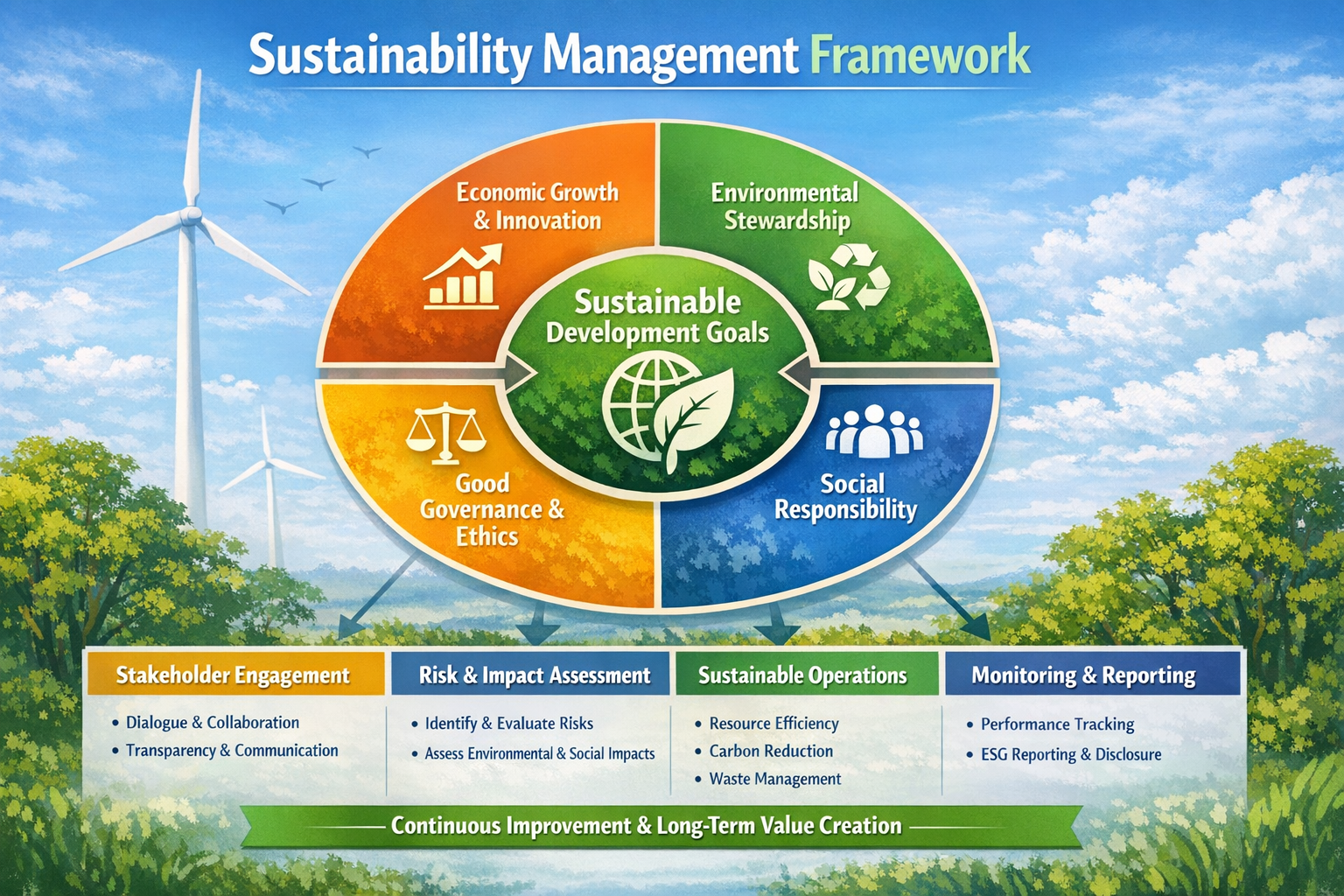
Peer for You Public Company Limited places importance on conducting its business with consideration for social responsibility, environmental stewardship, and good corporate governance. The Company takes into account the interests of all stakeholders in terms of economic, social, community, and governance aspects. The Company has established the following policies and operational guidelines:
Sustainability Development Policy
Conduct business based on the principles of good corporate governance while taking responsibility for society and the environment, including any activities related to sustainable development, with primary consideration given to the interests of all stakeholder groups.
Foster an organizational culture that encourages employees to perform their duties with a sense of responsibility and volunteerism, promoting their willingness to contribute their physical effort, dedication, and personal time to benefit communities.
Promote projects and activities that support society and the environment, as well as any initiatives related to sustainable development.
Sustainability Goals & UN SDGs
Has Sustainability Goals
Yes
Goals Description
Sustainability Management Targets Aligned with Business Strategy (Enhanced with 5-Year Performance Data)
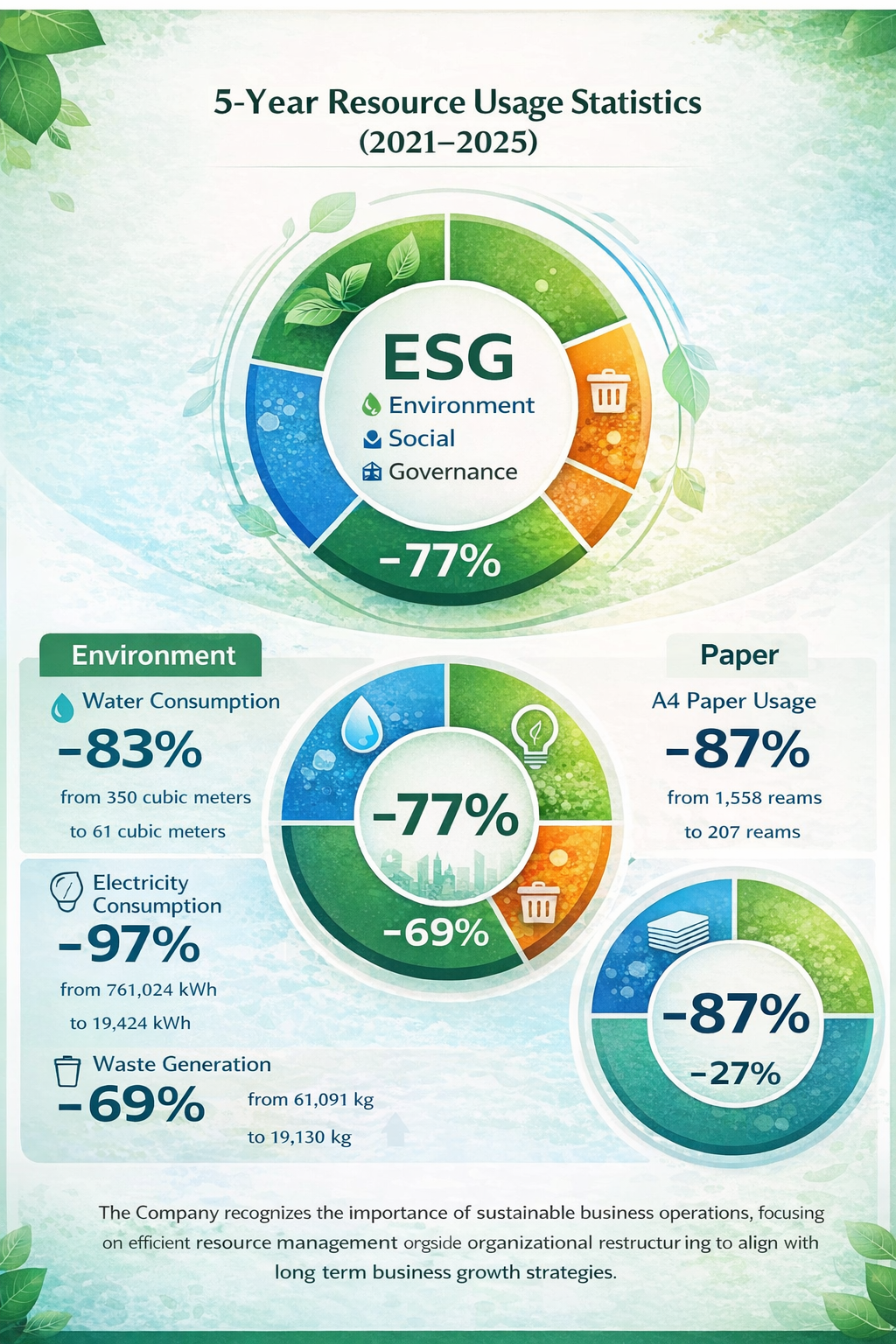
Based on the monitoring and analysis of the Company’s resource consumption data over the period 2021–2025, covering electricity usage, water consumption, waste management, and A4 paper usage, an overall continuous declining trend has been observed. This reduction became particularly significant in 2025, following the Company’s business restructuring and office relocation, which resulted in improved operational efficiency and more effective resource utilization.
Sustainability Management Targets
The Company places strong emphasis on sustainable business operations by focusing on efficient resource management alongside business restructuring to align with long-term growth strategies. The Company has established sustainability practices that are aligned with its business strategy, taking into consideration environmental and social impacts, as well as efficient resource utilization.
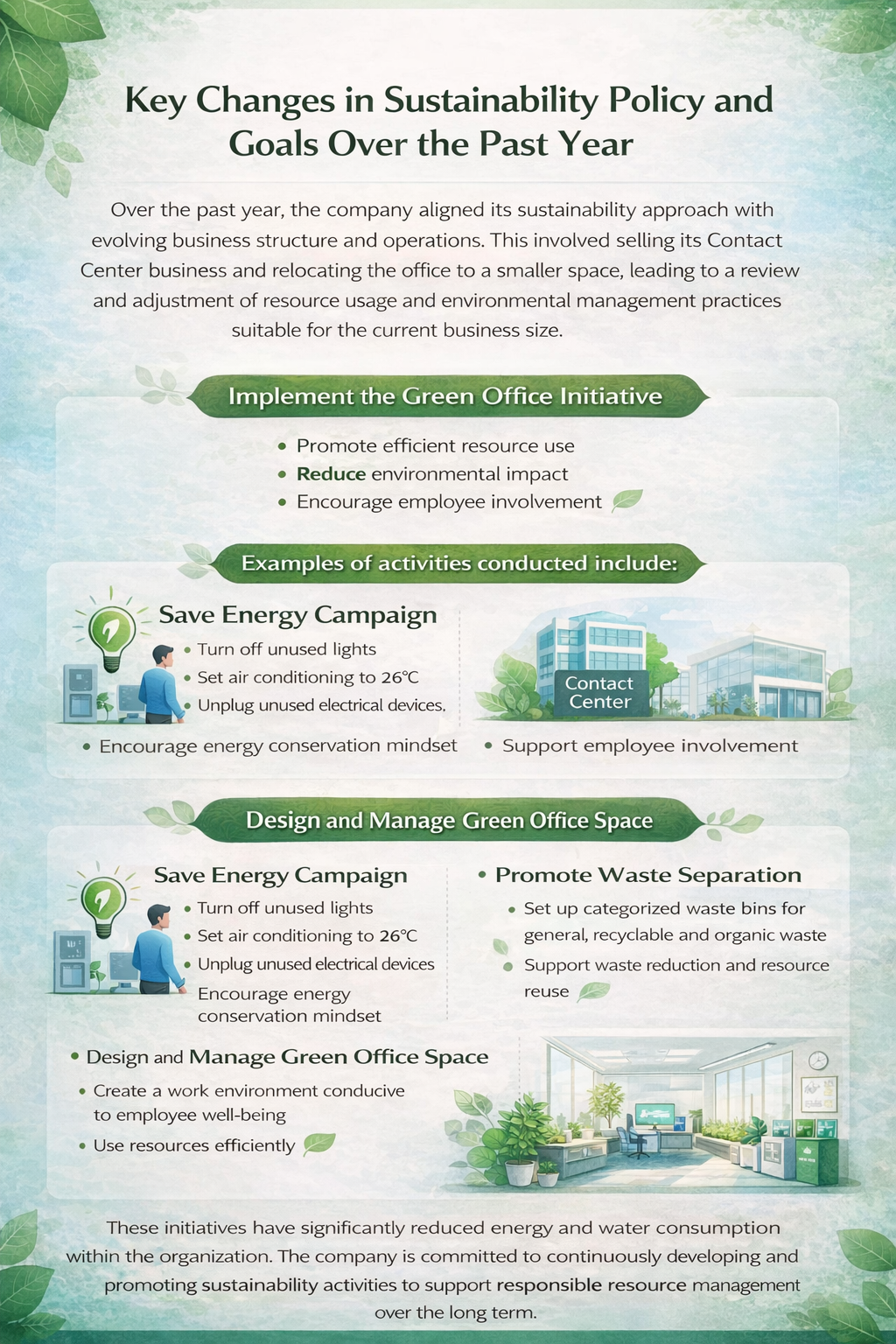
During the past year, the Company restructured its business by divesting its Contact Center operations and relocating to a smaller office space. This transformation enhanced operational efficiency and optimized resource management costs, resulting in a significant reduction in electricity and water consumption compared to previous periods.
From the analysis of 5-year historical data (2021–2025), the Company has consistently tracked and evaluated its resource consumption across electricity, water, waste, and A4 paper usage. The results indicate a continuous downward trend, particularly in 2025 when operations began at the new office. Key performance improvements are as follows:
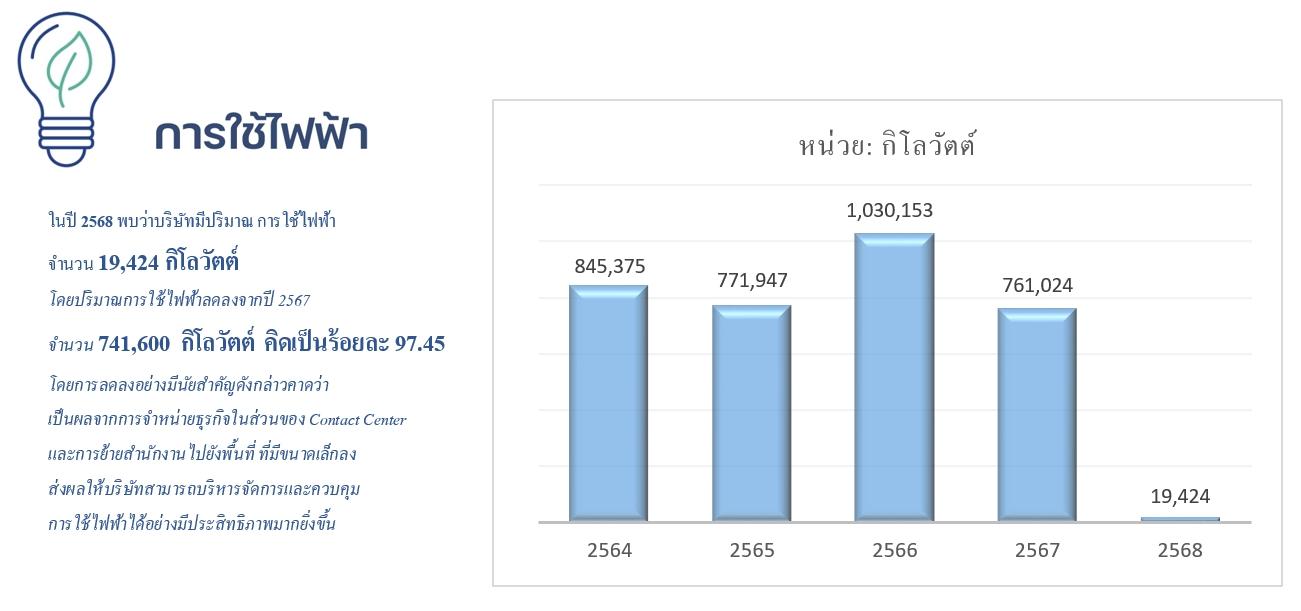
Electricity consumption decreased from 761,024 kWh in 2024 to 19,424 kWh in 2025, representing a reduction of 97.45%
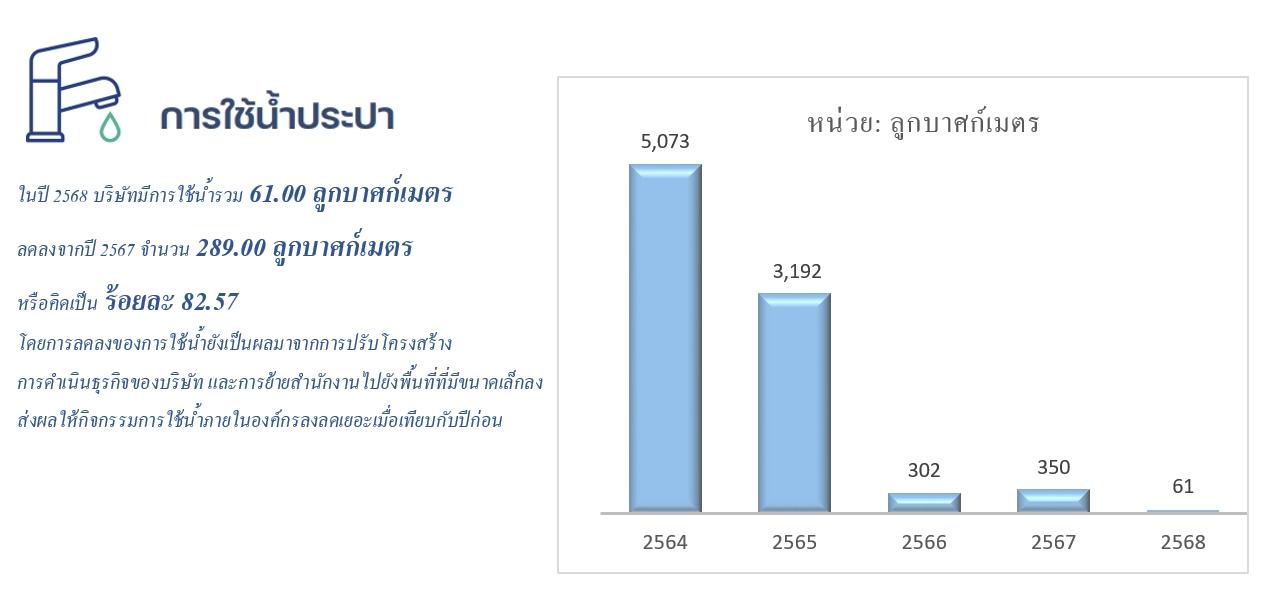
Water consumption decreased from 350 cubic meters in 2024 to 61 cubic meters in 2025, a reduction of 82.57%
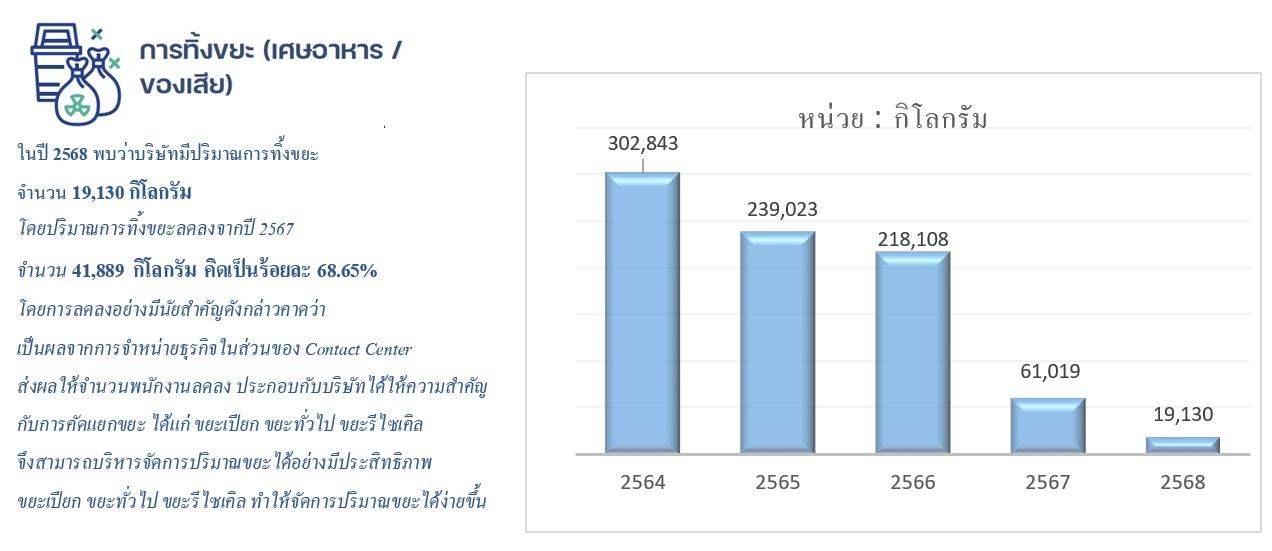
Waste generation decreased from 61,019 kilograms in 2024 to 19,130 kilograms in 2025, representing a reduction of 68.65%
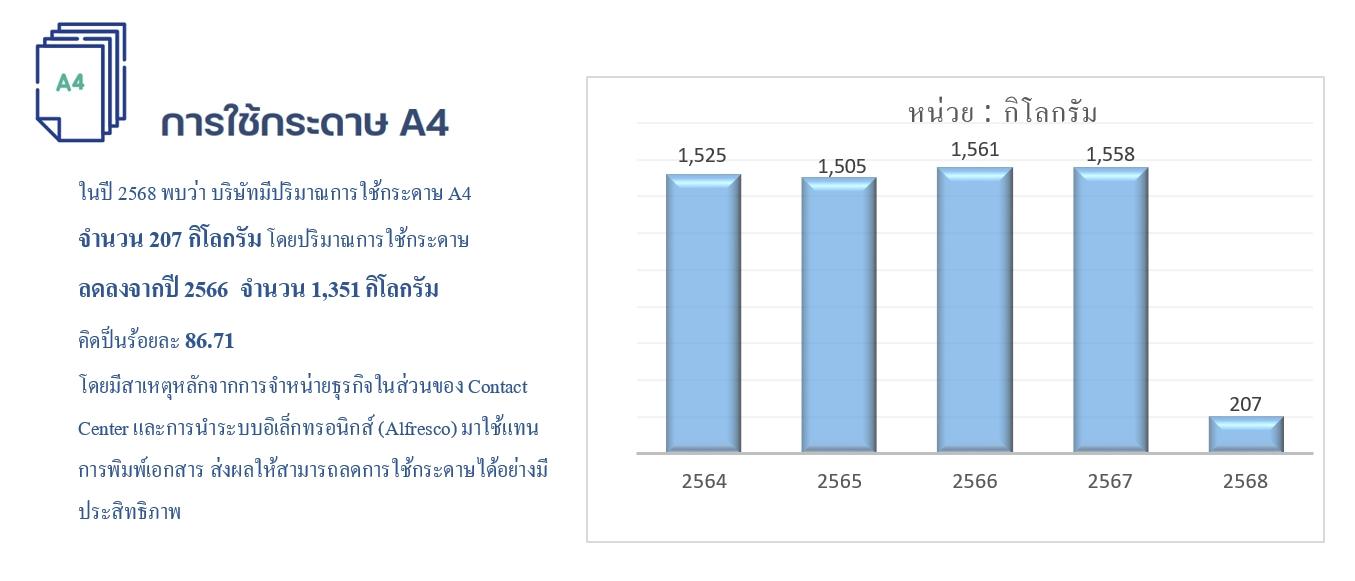
A4 paper usage decreased from 1,558 kilograms in 2024 to 207 kilograms in 2025, a reduction of 86.71%
These trends reflect the Company’s continuous improvement in resource management efficiency and align with the transformation of its business operations to better suit its organizational scale.
To build on this progress, the Company has established forward-looking sustainability targets, focusing on continuous and measurable resource reduction, as follows:
Achieve a minimum 10% annual reduction in electricity consumption
Improve water efficiency while promoting water conservation awareness among employees
Reduce waste generation and promote waste segregation and recycling practices
Continuously reduce A4 paper usage by promoting electronic document systems (Paperless)
The Company will regularly monitor and evaluate its performance against these targets and utilize the results to enhance operational processes. This approach supports sustainable business growth while ensuring responsible resource utilization and minimizing environmental impact in the long term.
UN Sustainable Development Goals
| SDG Goal |
|---|
| Goal 3 Good Health and Well-being |
| Goal 13 Climate Action |
| Goal 17 Partnerships for the Goals |
Policy Review
Policy Reviewed This Year
Yes
Policy Changed This Year
Yes
Review Details
Key Changes in Sustainability Policy and Goals Over the Past Year
Business Value Chain
Value Chain Description
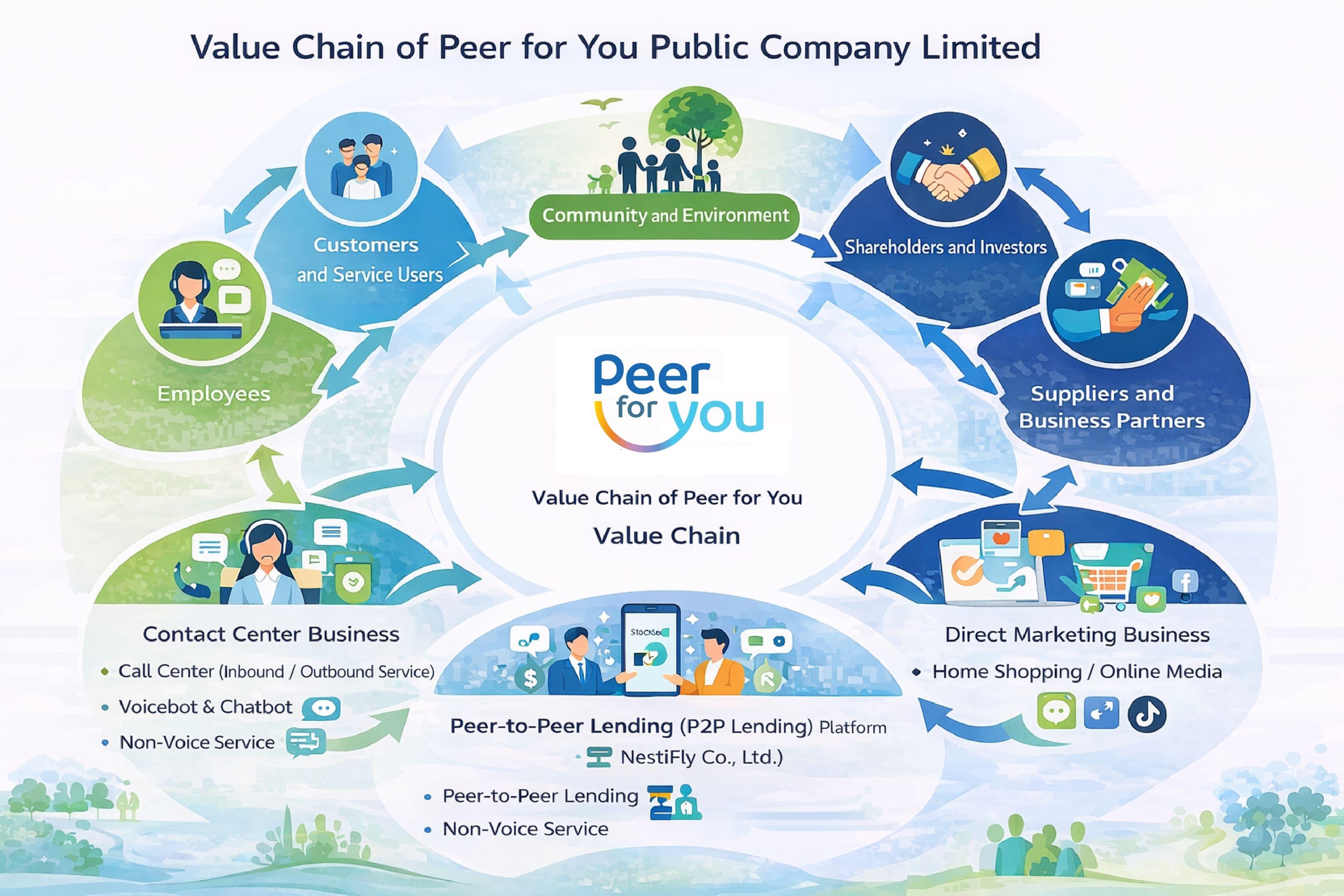
The Company is committed to conducting its business with responsibility toward society, the environment, and in accordance with good corporate governance principles (Environmental, Social, and Governance: ESG) throughout its value chain. The Company places importance on delivering high-quality products and services, while fostering satisfaction and trust among all stakeholder groups.
In conducting its business, the Company recognizes that its operations may generate both positive and negative impacts on stakeholders. Therefore, the Company has established a systematic approach to impact management by promoting stakeholder engagement to effectively identify, assess, and manage key issues. This approach supports sustainable business operations in alignment with good corporate governance practices.
Materiality Identification
The Company places importance on identifying and assessing material sustainability issues that may significantly impact its business operations. This includes consideration of both internal and external factors, covering economic, social, and environmental dimensions, as well as potential risks and business opportunities.
Such processes incorporate the expectations and feedback of all stakeholder groups, alongside industry trends and international standards, including the Global Reporting Initiative (GRI) Standards, to prioritize sustainability issues at different levels.
In 2024, the Company reviewed its material sustainability issues to align with its business direction and evolving economic and social environments. This review was based on in-depth analysis, stakeholder engagement, and impact assessment across multiple dimensions. The process covers seven key stakeholder groups, namely employees, shareholders, customers, business partners, government agencies, suppliers, and communities/society.
The Company operates in three core business segments:
Contact Center and Customer Relationship Management services
Peer-to-Peer Lending (P2P Lending) platform services through NestiFly Co., Ltd.
Direct Marketing business under Home Shopping and Online Media channels
Given the nature of its businesses, which involve customer data, digital technology, and financial transactions, the Company places strong emphasis on managing impacts on stakeholders comprehensively across the value chain, as outlined below:
Customers and Service Users
The Company is committed to delivering high-quality and standardized services across all business segments. In particular, the Contact Center business provides inbound, outbound, and non-voice services, supported by technologies such as voicebots and chatbots to enhance service efficiency.
The Company emphasizes:
Personal data protection (Data Privacy)
Information security and cybersecurity
Effective complaint management
to ensure customer trust and satisfaction.
Borrowers and Lenders (P2P Lending Business)
NestiFly Co., Ltd., as a P2P Lending platform provider, acts as an intermediary facilitating connections between borrowers and lenders, including loan agreement execution, payment processing, and debt collection.
The Company emphasizes:
Transparency in information disclosure
Credit risk assessment of borrowers
Risk-based return mechanisms
Compliance with applicable laws and regulatory requirements
to ensure fairness and mitigate risks for all platform users.
Customers in the Product Sales Business (Happy Shopping)
The Company operates a direct marketing business through television and online media channels, including websites and social media platforms. The Company focuses on:
Careful selection of quality products and services
Accurate and transparent product communication
After-sales services and return policies
to protect consumer rights and strengthen brand trust.
Employees
The Company recognizes employees as a key driver of business success, particularly in the Contact Center business, which requires specialized skills.
Key practices include:
Enhancing skills in customer service, digital technology, and regulatory compliance
Providing a suitable and safe working environment
Ensuring appropriate welfare and employee well-being
Suppliers and Business Partners
The Company conducts business with suppliers and partners in a fair and transparent manner, with emphasis on service standards, particularly in:
Information technology
Digital platforms
Product manufacturing and distribution
The Company also encourages adherence to legal requirements and ethical standards.
Shareholders and Investors
The Company operates under the principles of good corporate governance, with a focus on:
Sustainable growth
Effective risk management
Accurate, transparent, and verifiable disclosure of information
Society and the Environment
The Company recognizes the impacts arising from its business operations, particularly from the use of technology systems and mass communication. Therefore, the Company emphasizes:
Efficient use of resources
Reduction of paper usage through digital processes
Responsible business conduct toward society
Stakeholder Analysis
Stakeholder Analysis
| Stakeholder Type | Stakeholders | Stakeholder Expectations | Response to Expectations | Communication Activities |
|---|---|---|---|---|
| External stakeholders | 2913 · Description: Shareholders | Reasonable Returns for Shareholders
Sustainable Business Growth
Transparent Disclosure of Information | Conducting Business in Accordance with Good Corporate Governance Principles
Risk Management
Accurate and Complete Disclosure of Information | 2944 · Description: Annual General Meeting (AGM) |
| External stakeholders | 2923 · Description: Customers | Quality and Efficiency
Data Security
Value for Money | Development of Contact Center and Digital Platforms
Implementation of Voicebot and Chatbot Technologies
PDPA and Cybersecurity Measures | 2941 · Description: Online Communication · 2947 · Description: Satisfaction Survey |
| External stakeholders | 2899 · Description: Suppliers | Fair Business Practices
Timely Payment
Long-term Partnership | Transparent Procurement Policy
Fair Supplier Evaluation and Selection
Business Relationship Management | 2941 · Description: Online Communication · 2943 · Description: External Meeting |
| External stakeholders | 2900 · Description: Business partners | Collaboration and Sustainable Growth
Operational Excellence Standards | Joint Development of Systems and Services
Establishment of SLAs and Standards | 2943 · Description: External Meeting |
| Internal stakeholders | 2921 · Description: Employees | Employee Compensation and Benefits
Employment Security
Career Development Opportunities | Training and Development of Employee Skills
Employee Welfare and Workplace Safety
Fostering a Positive Work Environment | 2946 · Description: Employee Engagement Survey · 2947 · Description: Satisfaction Survey · 2948 · Description: Training / Seminar |
| External stakeholders | 2931 · Description: Government agencies and Regulators | Legal Compliance
Transparencyy | Compliance with Regulations (e.g., BOT, PDPA)
Preparation of Reports in Accordance with Regulatory Requirements | 2941 · Description: Online Communication · 2943 · Description: External Meeting |
| External stakeholders | 2929 · Description: Media | Provision of Accurate and Timely Information | Transparent Disclosure of Information
Corporate Communication | 2939 · Description: Press Release · 2941 · Description: Online Communication |
| External stakeholders | 2925 · Description: Financial institution | Corporate Credibility
Debt Repayment Capacity | Liquidity and Risk Management
Building Strong Relationships | |
| External stakeholders | 2928 · Description: Society | Responsible Business Operations
Minimization of Negative Impacts | Resource Consumption Reduction
Corporate Social Responsibility (CSR) Activities | 2940 · Description: Social Event |
Environmental Policy & Guidelines
Has an Environmental Policy
Yes
Policy Description
The company recognizes the impact of greenhouse gas emissions as a significant factor in climate change, affecting the environment, economy, and overall quality of life in society. Therefore, the company is committed to conducting business in an environmentally responsible manner, prioritizing the reduction of greenhouse gas emissions, efficient resource utilization, and adaptation to climate risks, to support the sustainable development of the organization and society. The operational guidelines are as follows:
Operational Guidelines
1 Greenhouse Gas Inventory and Assessment
The company will collect data and assess the volume of greenhouse gas emissions from various organizational activities.
Regularly prepare the organization's greenhouse gas inventory to use as data for planning greenhouse gas emission reductions.
2 Greenhouse Gas Emission Reduction
Promote efficient energy use.
Improve work processes to reduce resource consumption and waste generation.
Support the reduction of paper usage and digital operations by increasing system-based work to reduce paper consumption.
3 Energy and Resource Management
Promote economical electricity usage by requesting employees to turn off lights during lunch breaks.
Select energy-efficient equipment or technologies.
Support the reduction of water usage and proper waste management.
4 Employee and Stakeholder Engagement
Promote knowledge and awareness of climate change among employees.
Encourage employee participation in greenhouse gas reduction activities.
Communicate and foster collaboration with partners and stakeholders in environmental operations.
Summary of 5-Year Trends and Cumulative Statistics (2021–2025)
Based on the company's resource consumption data over the past 5 years (2021–2025), there has been a continuous downward trend in electricity consumption, water usage, and waste disposal volume, particularly a significant reduction in 2025 compared to the previous year. This clearly reflects improved efficiency in the organization's resource management. These changes are primarily supported by business restructuring, the divestment of the Contact Center business, and the relocation of offices to smaller premises, resulting in an overall reduction in resource usage. Furthermore, the company prioritizes efficient resource utilization and systematic waste segregation, which enhances long-term environmental management efficiency.
Based on these trends, the company has set 3-year targets for continuous environmental performance improvement as follows:
Electricity Consumption: Maintain low and continuously decreasing electricity consumption, aiming for an average reduction of no less than 3–5 percent per year.
Water Usage: Control and efficiently reduce water usage, aiming for an average reduction of no less than 3–5 percent per year.
Waste Management: Reduce total waste volume and increase waste segregation rates, aiming to reduce waste by no less than 5–10 percent per year.
A4 Paper Usage: Continuously reduce paper usage, aiming for an average reduction of no less than 5–10 percent per year, by promoting the use of electronic documents and document management systems (e.g., Alfresco) instead of printing.
The company will continuously monitor and evaluate performance to achieve set goals and support sustainable business operations.
Environmental Guidelines
| Guideline |
|---|
| Greenhouse Gas and Climate Change Management |
Environmental Policy Review
Policy Reviewed This Year
Yes
Review Details
Energy and Resource Consumption
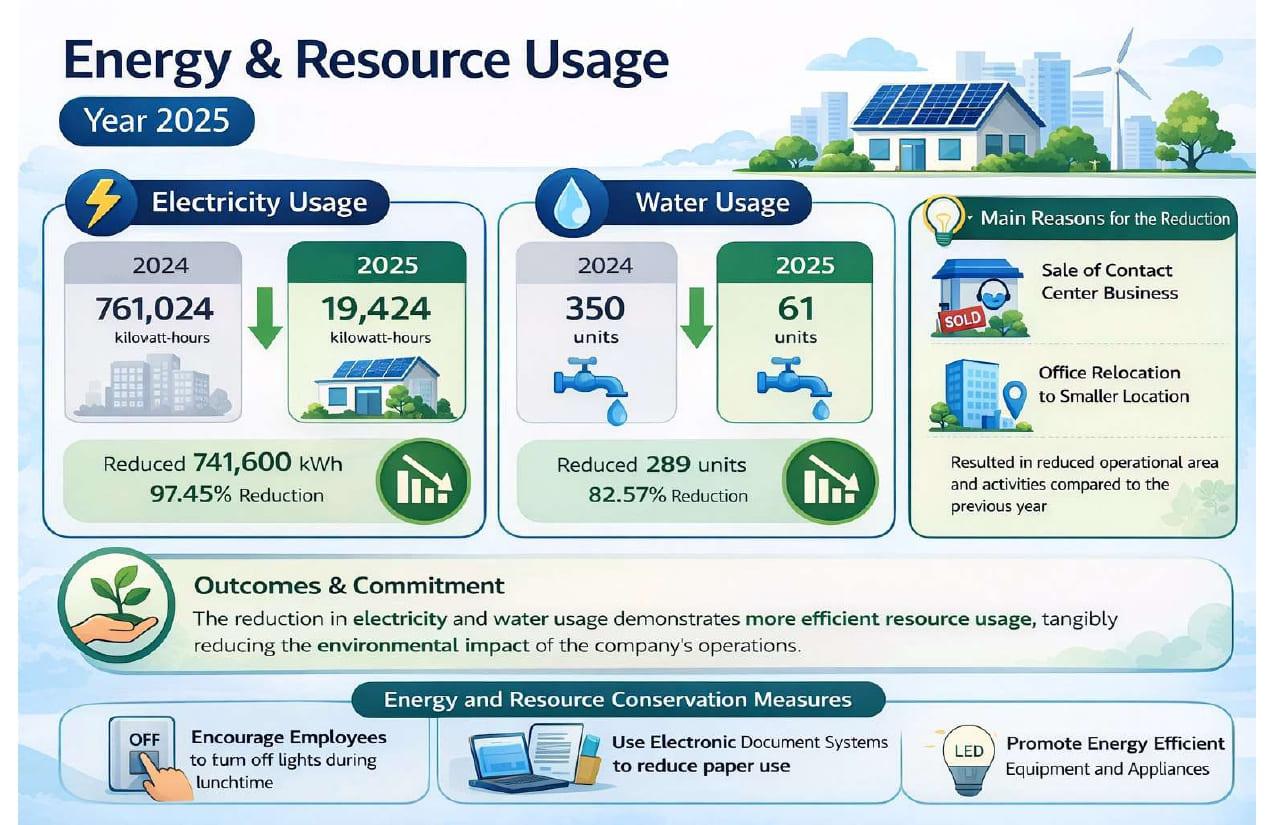
In 2025, the company's total electricity consumption was 19,424 kWh, a decrease from 2024, when total electricity consumption was 761,024 kWh. This represents a reduction of 741,600 kWh, or 97.45%. Concurrently, the company's total water consumption was 61 units, a decrease from 2024, when total water consumption was 350 units. This represents a reduction of 289 units, or 82.57%.
The decrease in electricity and water consumption is primarily due to the company's business restructuring. The company divested its Contact Center business and relocated its office to a smaller new premises. This resulted in a reduction in the organization's operational area and activities compared to the previous year.
This reduction in energy and resource consumption reflects more efficient resource utilization and helps mitigate the environmental impact of the company's operations. The company has implemented measures for energy conservation and efficient resource use, such as encouraging employees to switch off lights during lunch breaks, utilizing electronic document systems to reduce paper consumption, and promoting the use of energy-efficient equipment.
Policies & Guidelines Changed
| Change |
|---|
| Electricity Management |
| Waste Management |
| Greenhouse Gas and Climate Change Management |
Energy — Plan & Guidelines
Has an Energy Management Plan
Yes
Plan Description
Energy management plan
The company has an energy management plan focusing on efficient energy utilization and reducing resource consumption within the organization. The company has implemented energy conservation measures such as campaigning for employees to turn off lights and electrical equipment when not in use, turning off lights during lunch breaks, promoting the use of electronic document systems to reduce resource consumption, and selecting energy-efficient equipment. Furthermore, the company continuously monitors energy consumption data to analyze and improve energy management approaches for greater efficiency.
1. Planning
The organization has established guidelines or targets regarding energy consumption, such as
Set targets for electricity reduction
Promote efficient energy use
Establish energy-saving measures within the office
2. Implementation
Measures or activities actually implemented by the company, such as
Campaign for employees to turn off lights and electrical appliances when not in use
Use energy-efficient electrical equipment
Utilize electronic document systems to reduce resource consumption
Improve office areas to consume less energy
3. Monitoring
The company has
<9C1dtZjfHWqH>
Compare energy consumption annually
Analyze results and improve measures
Energy — Electricity Consumption
Electricity Consumption
| Metric | Current Year | Previous Year | Two Years Ago |
|---|---|---|---|
| Total electricity consumption within the organization (Kilowatt-Hours) | 19,130 | 761,024 | 1,030,153 |
| Electricity purchased for consumption from non-renewable energy sources (Kilowatt-Hours) | |||
| Electricity purchased or generated for consumption from renewable energy sources (Kilowatt-Hours) |
Energy — Fuel Consumption
Fuel Consumption
| Metric |
|---|
| Crude oil (Barrels) |
| Coal (Metric tonnes) |
| Jet fuel (Litres) |
| Diesel (Litres) |
| Gasoline (Litres) |
| Fuel oil (Litres) |
| Natural gas (Standard cubic feet) |
| LPG (Kilograms) |
| Steam (Metric tonnes) |
Energy — Targets
Has Set Targets
Yes
Targets
| Target | Base Year | Base Year Value | Target Year | Target Year Value | Target Change (%) | Unit |
|---|---|---|---|---|---|---|
| Reduction of electricity purchased for consumption | 2,024 | 741,600 | 2,025 | 19,424 | 97.45 | Kilowatt-hour |
Energy — Performance & Outcomes
Has Performance Results
Yes
Performance Description
The company has implemented energy management measures to promote efficient energy consumption within the organization. Campaigns have been conducted to raise employee awareness regarding appropriate energy usage, including requests for employees to switch off lights and electrical appliances when not in use, turning off lights during lunch breaks, promoting the adoption of electronic document systems to minimize resource consumption, and selecting energy-efficient electrical appliances.
The implementation of the aforementioned measures, combined with the company's business restructuring and relocation to a smaller office space, resulted in a significant reduction in the company's electricity consumption in 2025 compared to the preceding year. This demonstrates effective energy management and contributes to mitigating the environmental impact of the company's business operations.
1. Activities / Projects
are the actions undertaken by the company, such as
Office Energy Conservation Campaign Project
Measures for switching off lights during lunch breaks
Utilization of energy-efficient electrical appliances
Utilization of an electronic document system to reduce resource consumption, specifically the Alfresco system (Workflow system), by approving and attaching documents within the system.
Reduction of office space for efficient energy utilization
2. Results / Outcomes
are the outcomes resulting from operations, such as
Electricity consumption decreased compared to the previous year (2024). The reduction in leased office space enabled the company to effectively manage its electricity consumption.
Increased efficiency in resource utilization
Reduction in energy costs
Mitigation of environmental impact
Water — Plan & Guidelines
Has a Water Management Plan
Yes
Plan Description
The company recognizes the importance of efficient water resource management and is committed to conducting business with consideration for the optimal use of resources and minimizing environmental impact. Therefore, the company has established internal water management guidelines to promote appropriate water usage and reduce water resource loss from operations.
The company has developed a water management plan focused on maximizing water usage efficiency and raising employee awareness of water conservation, with the following operational guidelines:
1. Planning
The company has established water management guidelines to promote efficient water usage within the office, such as:
-
Promoting water conservation within the organization
-
Establishing guidelines for controlling and reducing water usage in various office activities
-
Raising employee awareness of the importance of water resource conservation
2. Implementation
-
Campaigning for employees to conserve water within the office
-
Inspecting and maintaining plumbing equipment to prevent water leakage
-
Promoting appropriate water usage behaviors in employees' daily lives
3. Monitoring
The company continuously monitors and evaluates water usage to further improve water management guidelines, with the following approaches:
-
Collecting and recording internal water usage data
-
Comparing water usage data annually
-
Analyzing water usage results to improve water management measures
Implementing the aforementioned water management plan enables the company to utilize water resources efficiently, reduce resource loss, and minimize environmental impact from the organization's business operations.
Water — Withdrawal, Discharge & Consumption
Water Withdrawal, Discharge & Consumption
| Metric | Current Year | Previous Year | Two Years Ago |
|---|---|---|---|
| Total water withdrawal (Cubic meters) | 61 | 350 | 302 |
| Total water withdrawal by third-party water (Cubic meters) | |||
| Total water withdrawal by surface water (Cubic meters) | |||
| Total water withdrawal by groundwater (Cubic meters) | |||
| Total water withdrawal by seawater (Cubic meters) | |||
| Total water withdrawal by produced water (Cubic meters) | |||
| Percentage of wastewater treated before discharge (%) | |||
| Total water discharge (Cubic meters) | |||
| Total water discharge to third-party water (Cubic meters) | |||
| Total water discharge to surface water (Cubic meters) | |||
| Total water discharge to groundwater (Cubic meters) | |||
| Total water discharge to seawater (Cubic meters) | |||
| Total water consumption (Cubic meters) | 61 | 350 | 302 |
| Recycled water (Cubic meters) |
Water — Targets
Has Set Targets
Yes
Targets
| Target | Base Year | Base Year Value | Target Year | Target Year Value | Target Change (%) | Unit |
|---|---|---|---|---|---|---|
| Reduction of water withdrawal | 2,024 | 350 | 2,025 | 61 | 82.57 | Cubic meters |
Water — Performance & Outcomes
Has Performance Results
Yes
Performance Description
Water Management Performance and Outcomes.
The company prioritizes efficient water resource management by stipulating that 2024 is the base year. for monitoring and evaluating the organization's water consumption, which has a total water consumption volume of 350.00 cubic meters. and has set a target for water consumption reduction in 2025.
In 2025, the company's total water consumption was 61.00 cubic meters. a decrease from the base year by 289.00 cubic meters. or equivalent to 82.57 percent. which is a result of implementing internal water management measures, including promoting water conservation, inspecting plumbing equipment to prevent water leakage, and raising employee awareness of the importance of water resource conservation.
Furthermore, the reduction in water consumption is also a result of the company's business restructuring and the relocation of its office to a smaller area, leading to a decrease in internal water usage activities compared to the previous year.
This performance reflects the company's efficient water resource management and helps reduce resource consumption, as well as minimizing environmental impacts from the organization's business operations.
Waste — Plan & Guidelines
Has a Waste Management Plan
Yes
Plan Description
The company recognizes the importance of proper waste management, focusing on reducing waste from operations, efficient resource utilization, and promoting waste segregation within the organization to help mitigate the environmental impact of the company's business operations.
The company has established an internal waste management plan, focusing on waste reduction, waste segregation, and efficient waste management, while also encouraging employees to participate in environmental care. The operational guidelines are as follows:
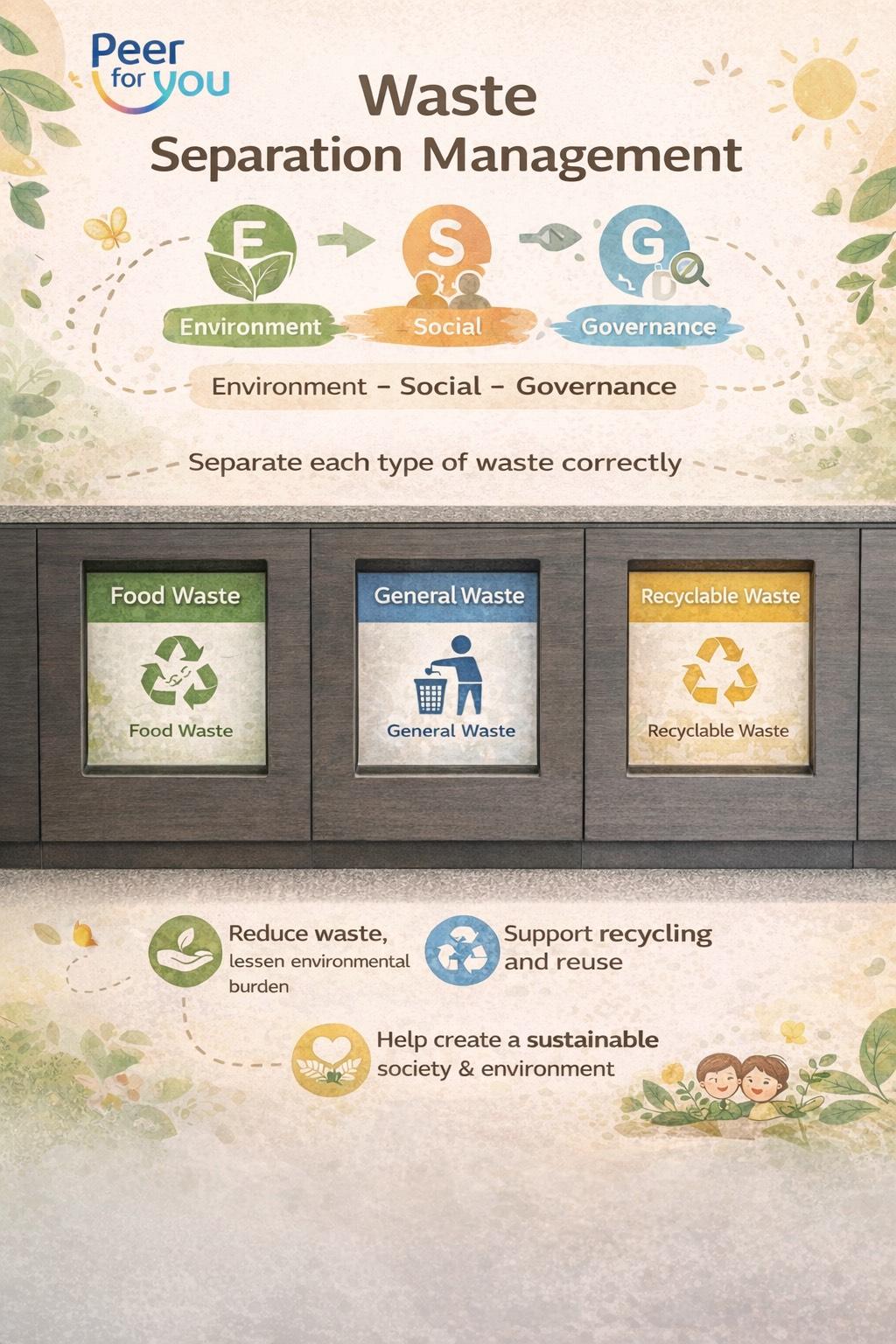
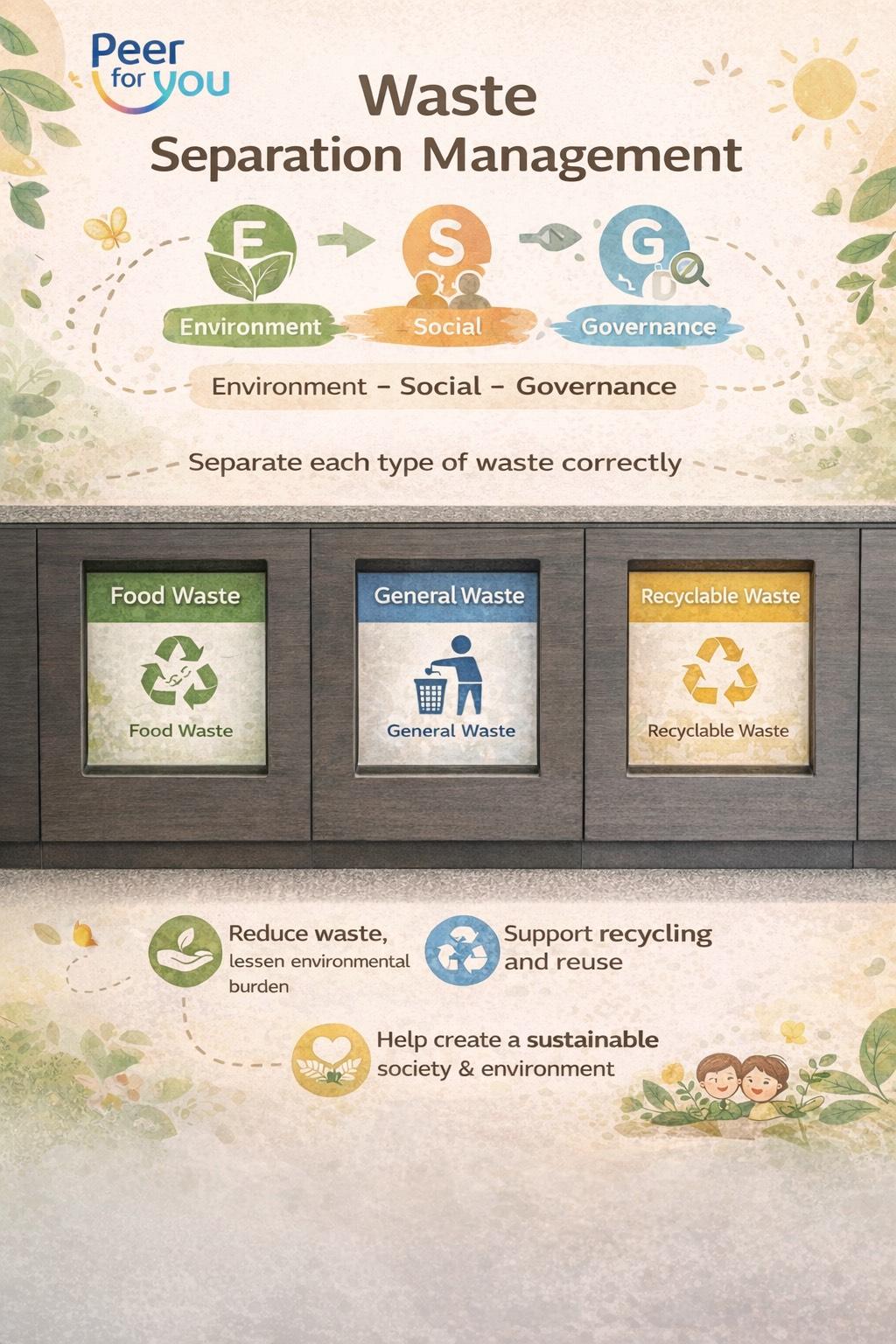
Arranging for waste segregation by type, including wet waste, general waste, and recyclable waste.
Campaigning for employees to segregate waste before disposal.
Promoting the reduction of paper usage by utilizing electronic document systems in operations.
Promoting the reuse or recycling of materials that can be repurposed.
Waste — Generation, Disposal & Recycling
Waste Generation, Disposal & Recycling
| Metric | Current Year | Previous Year | Two Years Ago |
|---|---|---|---|
| Total waste generated (Kilograms) | 19,130 | 61,019 | 218,108 |
| Non-hazardous waste (Kilograms) | 19,130 | 61,019 | 218,108 |
| Non-hazardous waste - Landfilling (Kilograms) | |||
| Non-hazardous waste - Incineration (with energy recovery) (Kilograms) | |||
| Non-hazardous waste - Incineration (without energy recovery) (Kilograms) | |||
| Non-hazardous waste - Other disposal operations (Kilograms) | |||
| Hazardous waste (Kilograms) | |||
| Hazardous waste - Landfilling (Kilograms) | |||
| Hazardous waste - Incineration (with energy recovery) (Kilograms) | |||
| Hazardous waste - Incineration (without energy recovery) (Kilograms) | |||
| Hazardous waste - Other disposal operations (Kilograms) | |||
| Total reused/recycled waste (Kilograms) | |||
| Reused/Recycled non-hazardous waste (Kilograms) | |||
| Reused non-hazardous waste (Kilograms) | |||
| Recycled non-hazardous waste (Kilograms) | |||
| Reused/Recycled hazardous waste (Kilograms) | |||
| Reused hazardous waste (Kilograms) | |||
| Recycled hazardous waste (Kilograms) |
Waste — Targets
Has Set Targets
Yes
Targets
| Waste Type | Disposal Approach | Target | Base Year | Base Year Value | Target Year | Target Year Value | Target Change (%) | Unit |
|---|---|---|---|---|---|---|---|---|
| Non-hazardous waste | 2763 · Other name: Waste Segregation at Source: Organic Waste (e.g., food scraps), General Waste (e.g., non-recyclable waste), Recyclable Waste (e.g., paper, plastic, glass bottles, and metal). · Description: Other | Reduce waste volume | 2,024 | 61,019 | 2,025 | 19,130 | 68.66 | Kilograms |
Waste — Performance & Outcomes
Has Performance Results
Yes
Performance Description
The company prioritizes the reduction of waste generation, especially non-hazardous waste, through systematic and continuous operations to support efficient resource utilization and minimize environmental impact.
Waste Segregation at Source (Waste Segregation at Source)
The company has clearly designated separate waste bins within its premises to encourage employees to participate in proper waste segregation, categorized as:
Organic Waste (Organic Waste) such as food scraps
General Waste (General Waste) such as non-recyclable waste
Recyclable Waste (Recyclable Waste) such as paper, plastic, glass bottles, and metal
along with communication signs and proper waste disposal guidelines at each point.
Waste Reduction (Waste Reduction)
The company implements waste reduction measures, such as:
Reducing the use of single-use materials (Single-use materials)
Promoting the use of reusable materials
Supporting the use of electronic documents to reduce paper consumption.
Reuse & Recycling (Reuse & Recycling)
Recyclable waste is segregated and collected for delivery to authorized disposal or recycling contractors to reduce the amount of waste sent to landfills.
Proper Waste Disposal (Proper Disposal)
General waste and non-recyclable waste are collected and transferred to relevant agencies for proper disposal in accordance with sanitation principles and applicable laws.
Awareness & Engagement (Awareness & Engagement)
The company communicates and campaigns to educate employees on waste segregation and reduction, such as organizing activities or internal public relations.
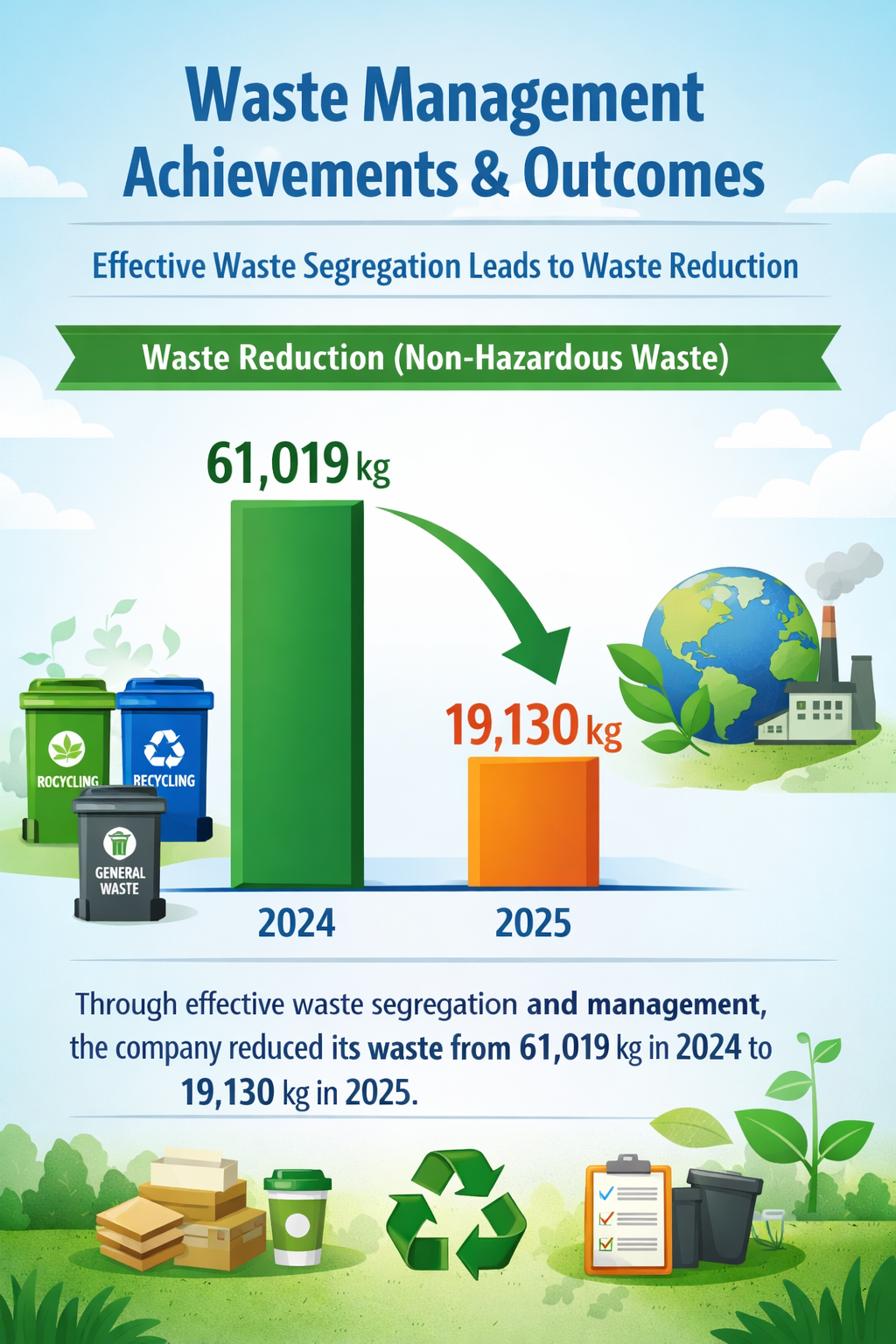
resulting in a reduction in waste volume from 61,019 kg in 2024 to 19,130 kg in 2025, due to the relocation to a smaller office space and campaigns encouraging employees to dispose of waste according to the categories provided by the company.
GHG — Plan & Guidelines
Has a GHG Management Plan
Yes
Plan Description
The company recognizes the importance of reducing greenhouse gas emissions, which is a key factor contributing to climate change. Therefore, the company is committed to conducting business with consideration for minimizing environmental impact, while also promoting efficient energy and resource utilization. A greenhouse gas management plan has been established to control and reduce emissions from the organization's operations.
The company defines its greenhouse gas management operational guidelines as follows:
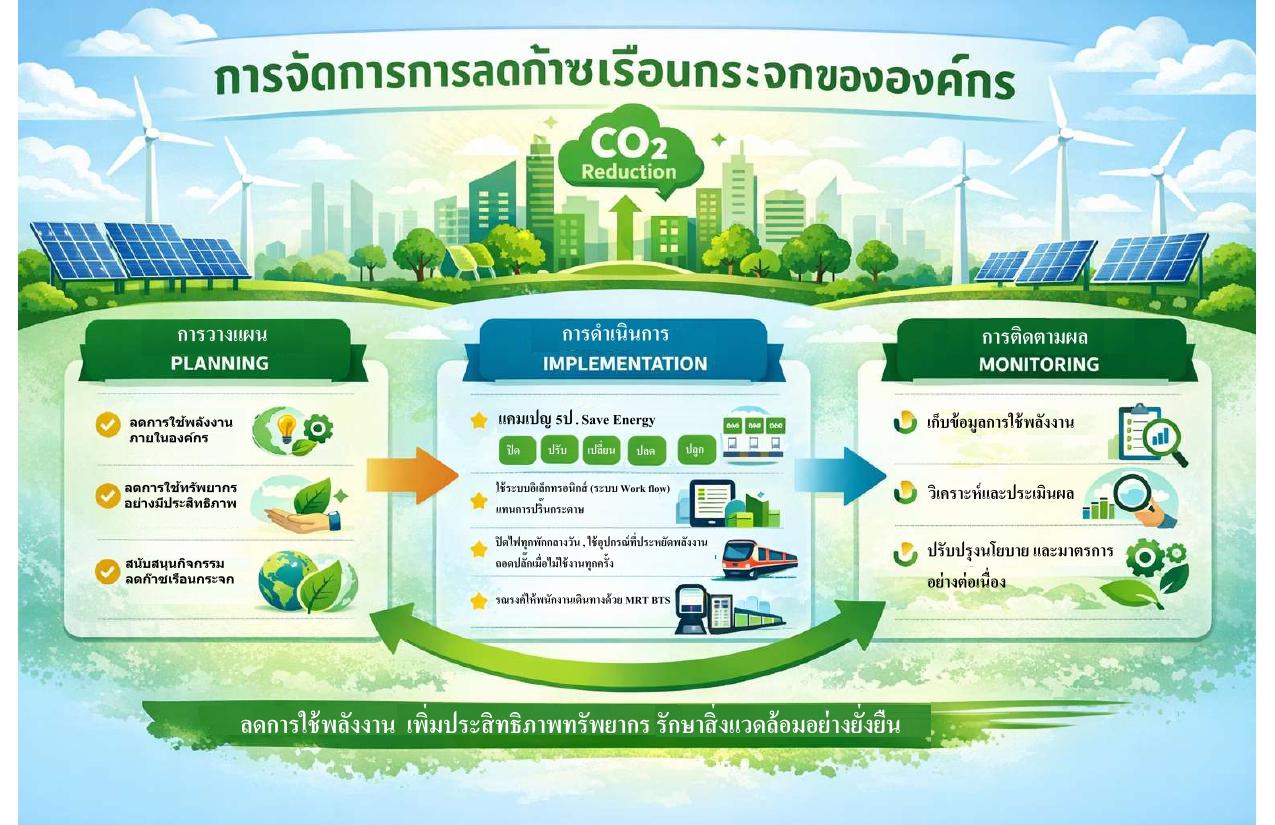
1. Planning
The company establishes guidelines for managing greenhouse gas emissions to support environmentally friendly operations, such as
-
Establishing measures to reduce energy consumption within the organization
-
Promoting efficient resource utilization
-
Supporting operations that reduce greenhouse gas emissions
2. Implementation
The company implements measures to reduce greenhouse gas emissions from organizational activities, such as
-
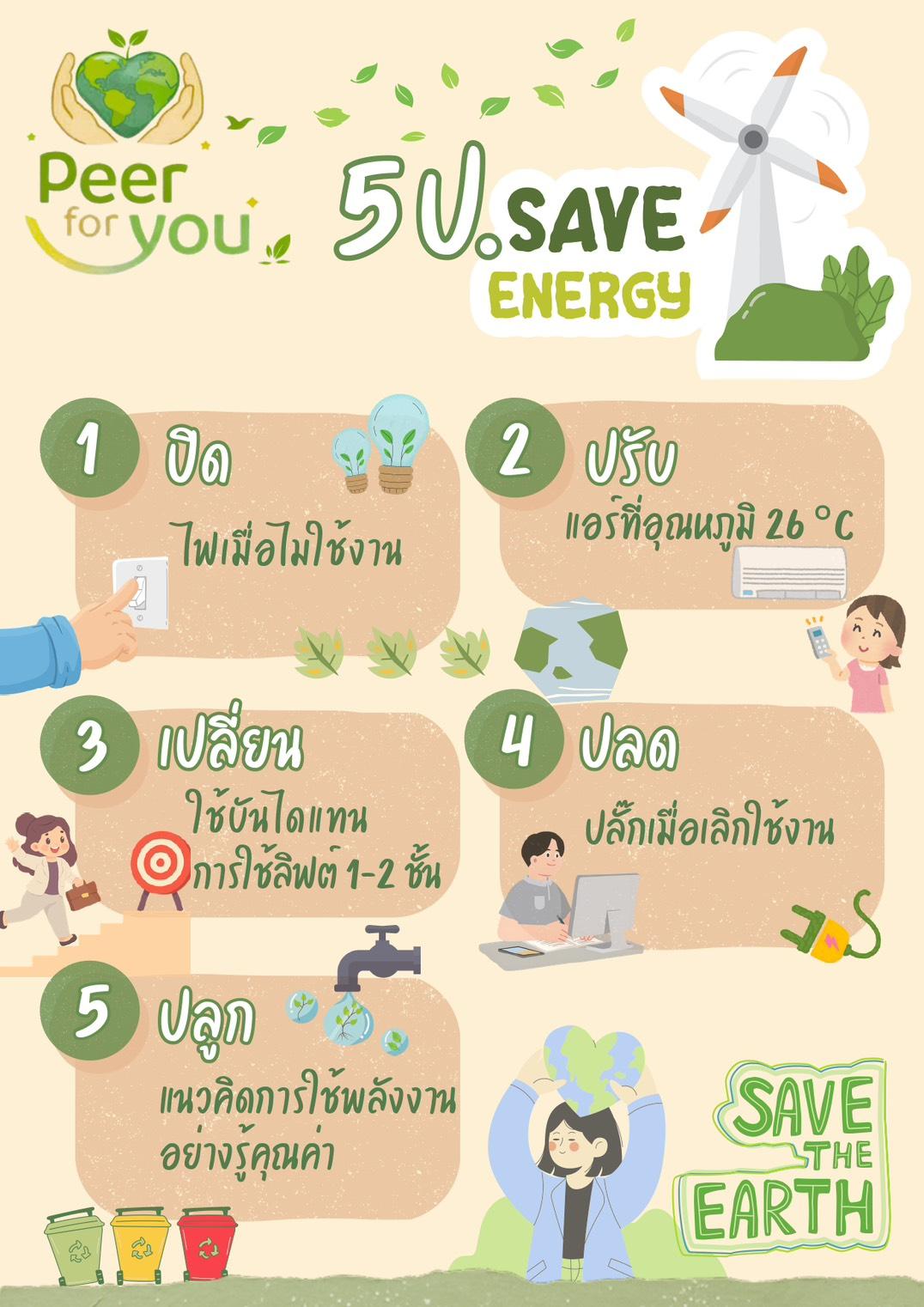
Campaigning for employees to conserve electricity, with the company promoting and publicizing the '5 Ps': 1. Turn off lights when not in use. 2. Set air conditioning to 26 degrees Celsius. 3. Use stairs instead of elevators for 1-2 floors. 4. Unplug devices when not in use. 5. Cultivate the concept of valuing energy use.
-
Promoting the use of electronic document systems to reduce paper consumption
-
Selecting energy-efficient office equipment
-
Managing office space for appropriate energy use
-
Encouraging employees to use public transportation for commuting to work, especially electric trains. BTS and MRT As the company's new office is located in an area convenient for public transportation, it helps reduce the use of personal vehicles, decrease energy consumption, and mitigate greenhouse gas emissions from commuting.
3. Monitoring
The company continuously monitors and evaluates its performance in reducing greenhouse gas emissions to further improve operational efficiency, with the following approaches: -
Collecting data on electricity and resource consumption within the organization
-
Analyzing energy consumption data to monitor greenhouse gas emission trends
-
Continuous improvement of energy and resource management measures
Operating according to the aforementioned greenhouse gas management plan enables the company to reduce energy consumption, enhance resource efficiency, and mitigate environmental impacts from its business operations.
GHG — Emissions
GHG Emissions
| Metric | Previous Year | Two Years Ago |
|---|---|---|
| Total GHG emissions (Metric tonnes of carbon dioxide equivalent) | 190,991 | 1,071,563 |
| Total greenhouse gas emissions 1 (Metric tonnes of carbon dioxide equivalent) | 0 | |
| Total greenhouse gas emissions 2 (Metric tonnes of carbon dioxide equivalent) | 31,770 | 514,936 |
| Total greenhouse gas emissions 3 (Metric tonnes of carbon dioxide equivalent) | 159,221 | 556,627 |
GHG — Emissions Verification
Emissions Verified by a Third Party
No
GHG — Principles & Standards
Principles & Standards Applied
| Standard |
|---|
| 2671 |
GHG — Targets
Has Set GHG Targets
No
GHG — Performance & Outcomes
Has Performance Results
Yes
Performance Description
Performance and Outcomes in Greenhouse Gas Management
The company prioritizes reducing environmental impacts from business operations by focusing on efficient energy and resource management, which contributes to reducing indirect greenhouse gas emissions from organizational activities.
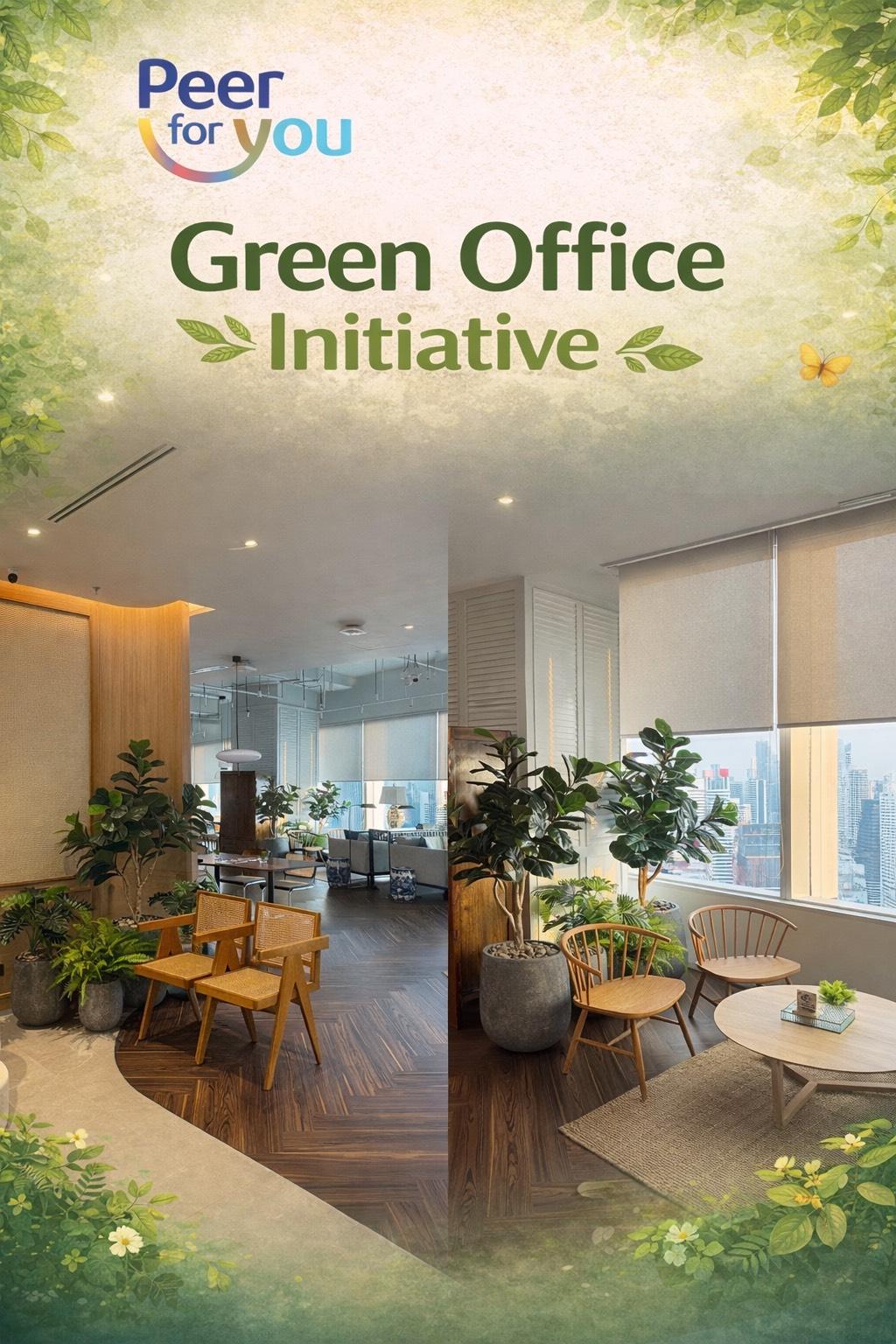
In the past year, the company implemented the project Green Office Initiative and energy conservation campaigns within the organization, such as promoting turning off lights and electrical appliances when not in use, adjusting air conditioner temperatures to appropriate levels, promoting the use of electronic document systems to reduce paper consumption, and promoting waste separation within the office to increase resource utilization.
Furthermore, in the past year, the company restructured its business by divesting its Contact Center business and relocating its office to a new, smaller premises, resulting in reduced electricity and resource consumption commensurate with the scale of operations.
The implementation of these measures has led to a significant reduction in resource consumption and operational waste, with operational waste decreasing from 61,019 kilograms in 2024 to 19,130 kilograms in 2025, representing a reduction of approximately 68.7 percent. which helps reduce environmental impacts and indirect greenhouse gas emissions from organizational activities.
The company will continue to develop energy and resource management measures and promote employee participation in energy and environmental conservation to support sustainable business operations and reduce long-term impacts on climate change.
Environmental Legal Incidents
Legal Violation Incidents
| Metric | Current Year | Previous Year | Two Years Ago |
|---|---|---|---|
| Number of cases or incidents of legal violations or negative environmental impact (cases) | 0 | 0 | 0 |
Social Sustainability — Overview
Operating Results — Introduction
The Company is committed to conducting its business with social responsibility, focusing on enhancing employee well-being, ensuring a safe working environment, and fostering strong employee engagement.
During the year, the Company’s key social performance includes:
Employee Health and Well-being
The Company provides annual health check-ups for all employees and promotes health-related activities such as blood donation to contribute to society and encourage a culture of giving.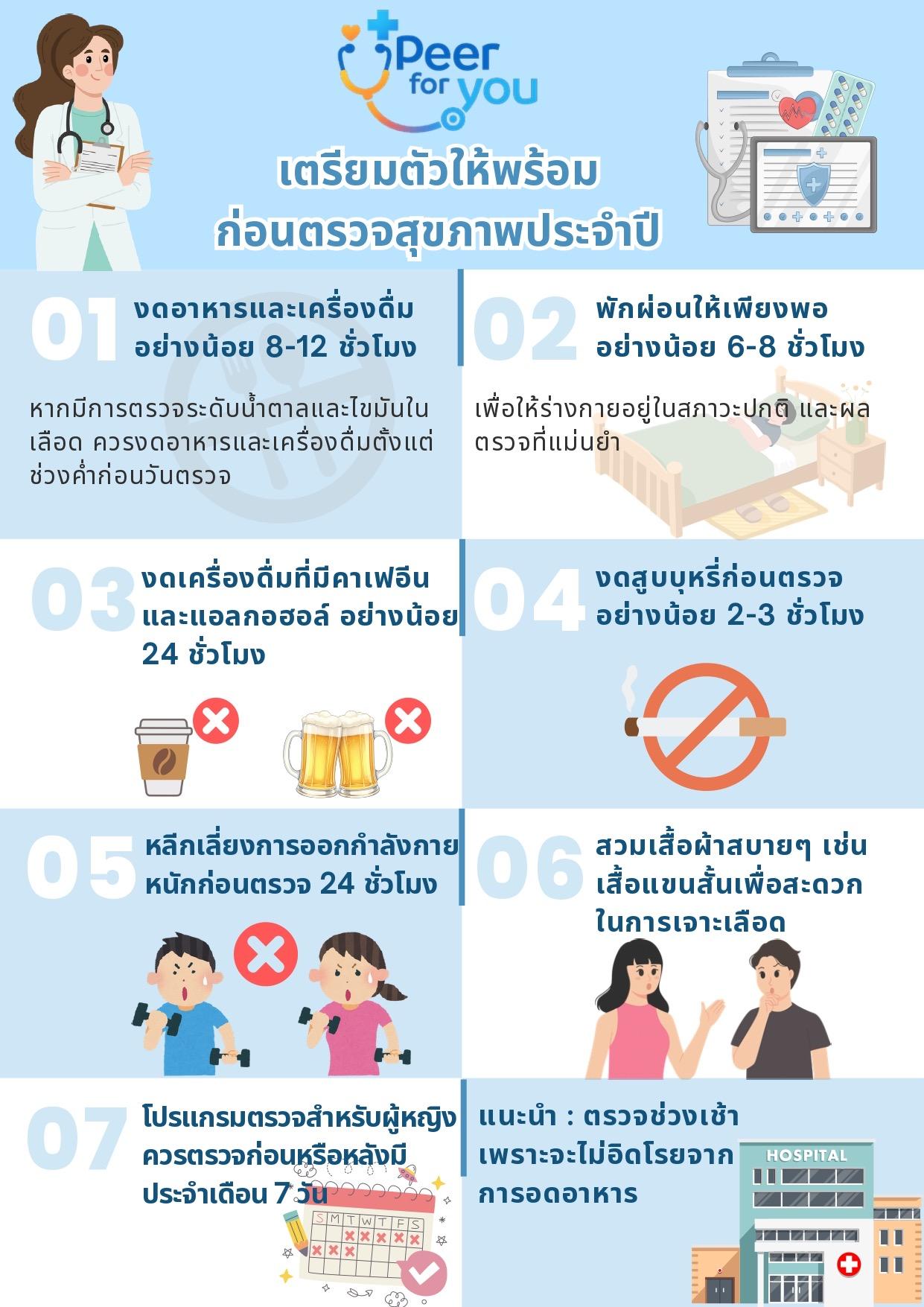


Employee Development
The Company conducts its business with a strong commitment to social responsibility, placing importance on enhancing employees’ quality of life, ensuring a safe working environment, and fostering positive relationships within the organization.During the past year, the Company achieved key initiatives as follows:
Employee Health and Well-being
The Company provides annual health check-ups for all employees and promotes health-related activities. Employees are encouraged to participate in blood donation campaigns with the Thai Red Cross Society, in collaboration with Samyan Mitrtown, to support society and cultivate a spirit of giving.
Employee Development
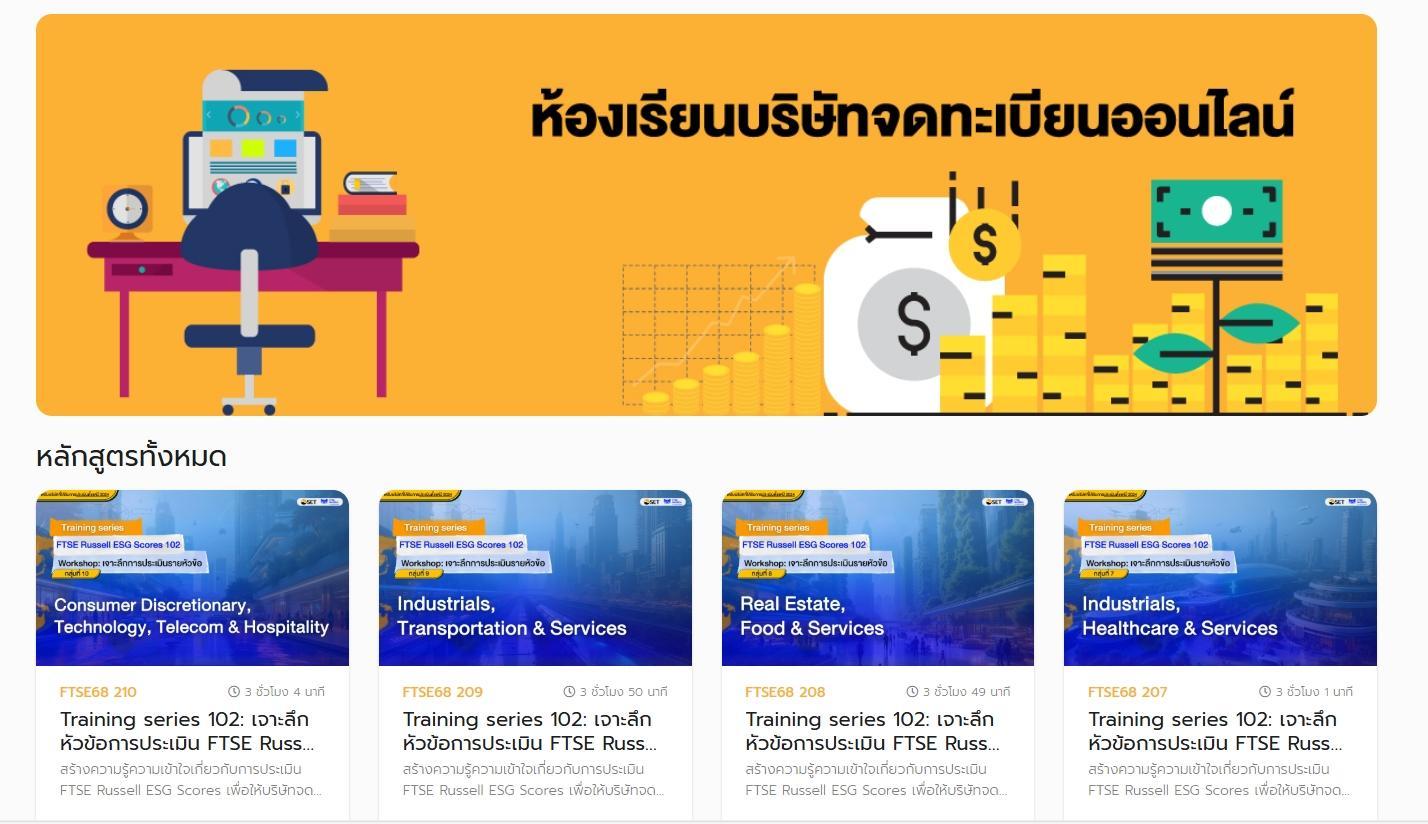
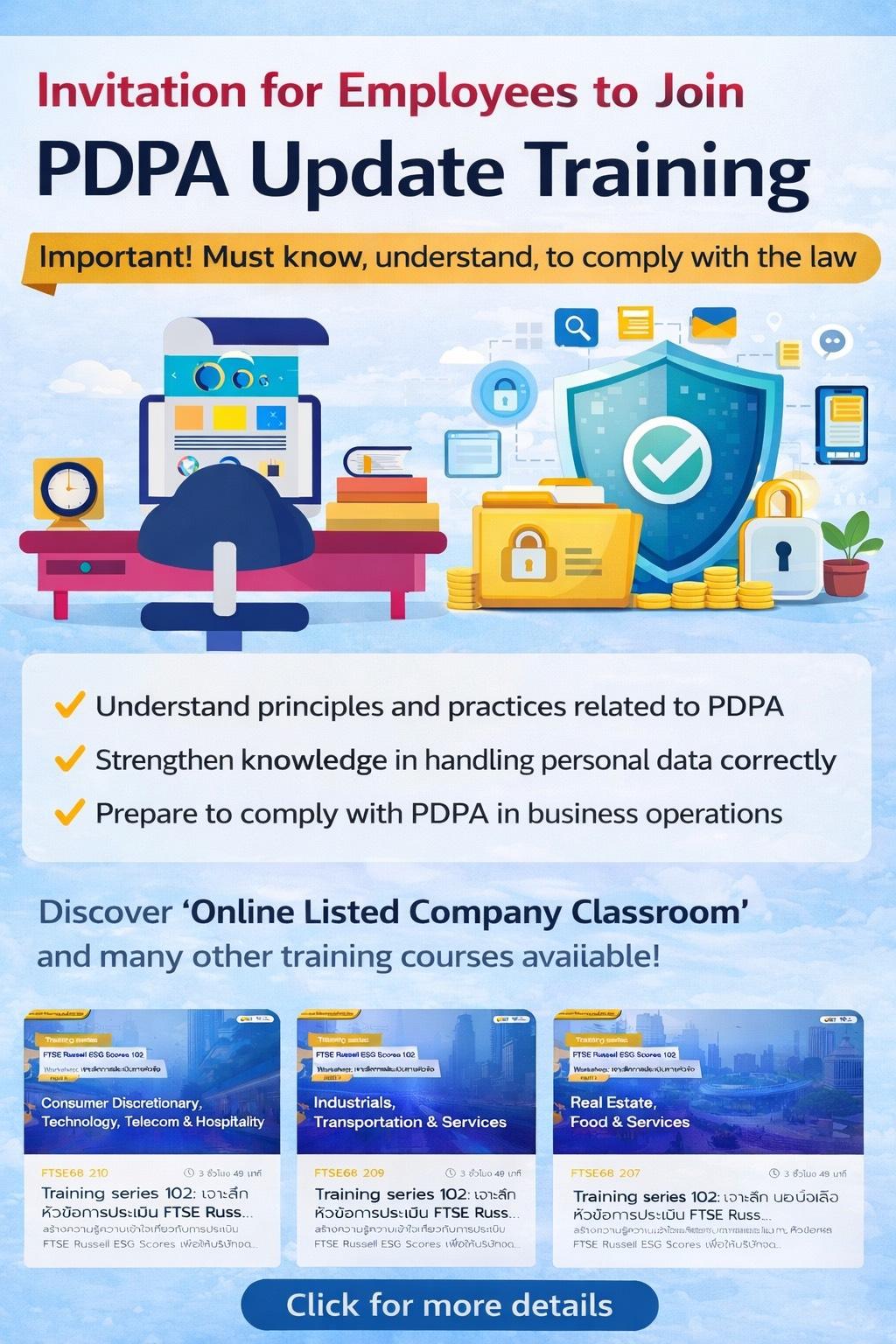
The Company supports employees in attending job-related training programs free of charge to enhance their skills, knowledge, and work efficiency. The training courses attended by employees in 2025 are as follows:
Disclosure via SET Link System (Session 1/2025)
Preparation of e-One Report (Phase 1) via SET Link System
Demonstration on e-Proxy Voting Preparation, TSD
Director and Executive Registration System (E-Approval), SEC
AI-Powered Internal Control: Building a Robust Business Defense, SET
CAE Forum 2025: “Forward-Looking Internal Audit Profession”, The Institute of Internal Auditors of Thailand
Preparation of e-One Report (Phase 2) via SET Link System
Carbon Credit in 56-1 One Report 2025, TIA
Road to Certify with Thai CAC 4/2025, IOD-CAC
Road to Join with CAC & SME Briefing 4/2025, IOD-CAC
Intensive Preparation for Full Score 2026, TIA
Disclosure via SET Link System (Session 4/2025)
Registration System, TSD
Workplace Safety Promotion
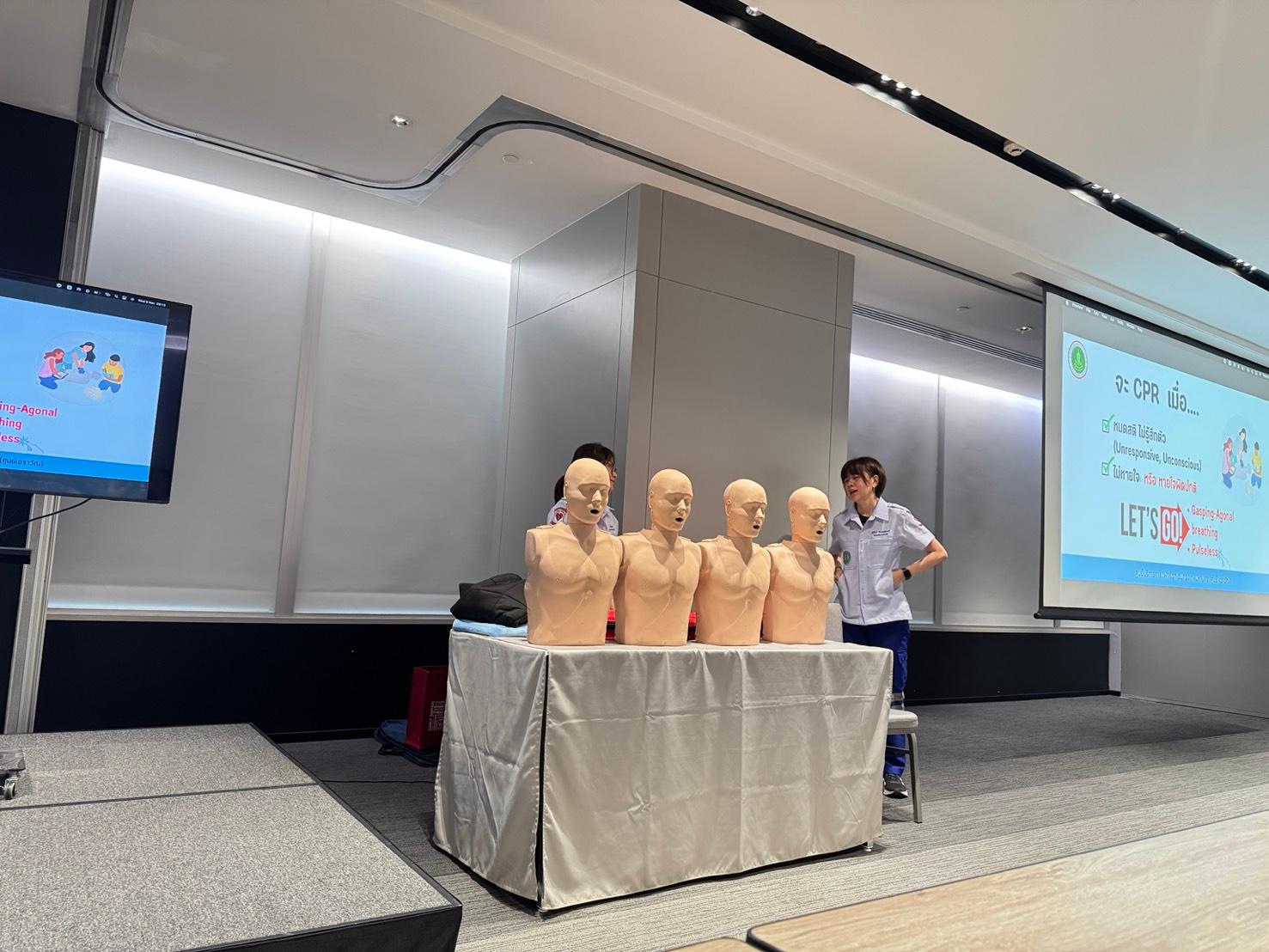
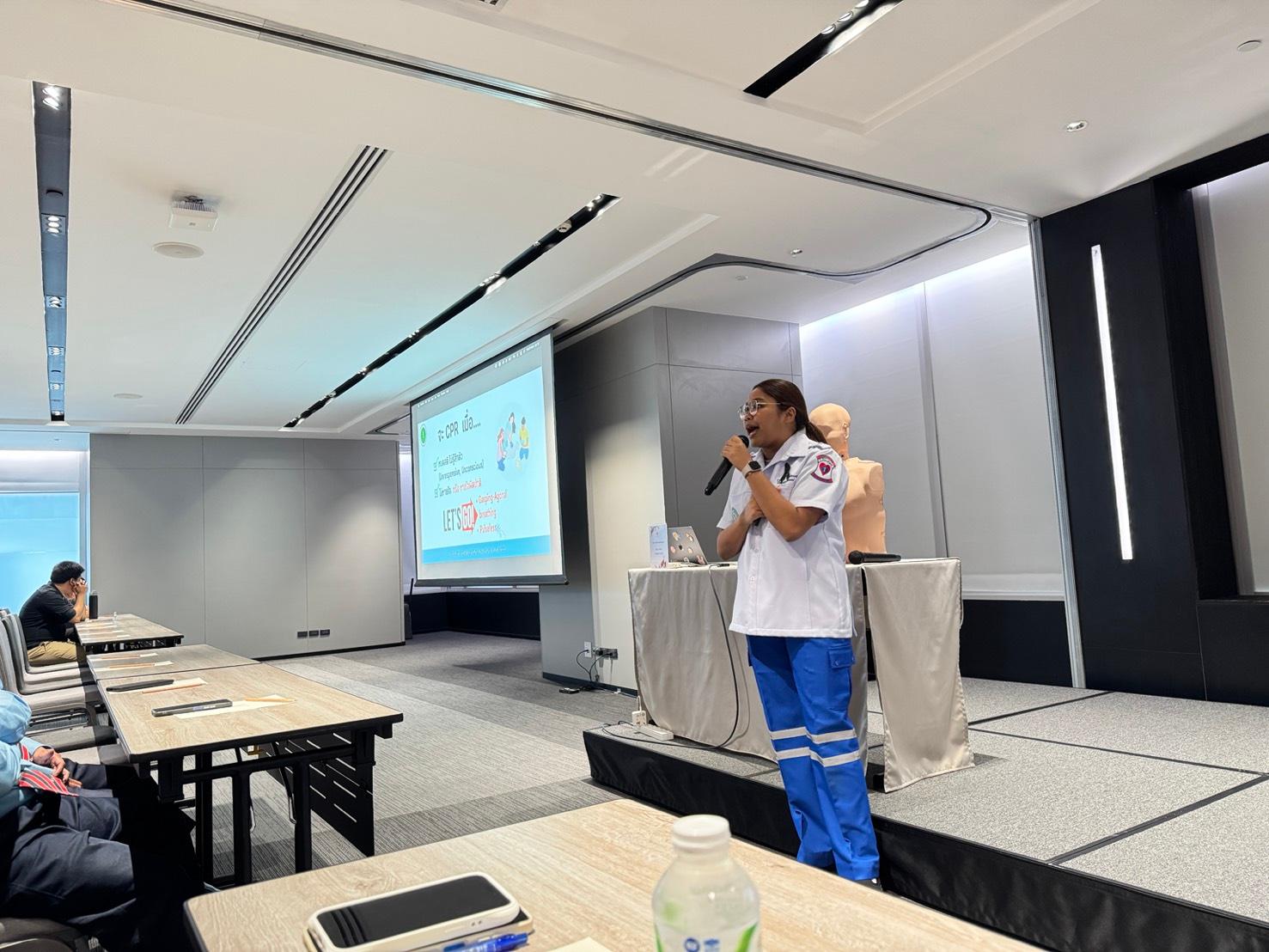
The Company conducts annual fire safety training and Cardiopulmonary Resuscitation (CPR) training to ensure employees are well-prepared to handle emergency situations effectively.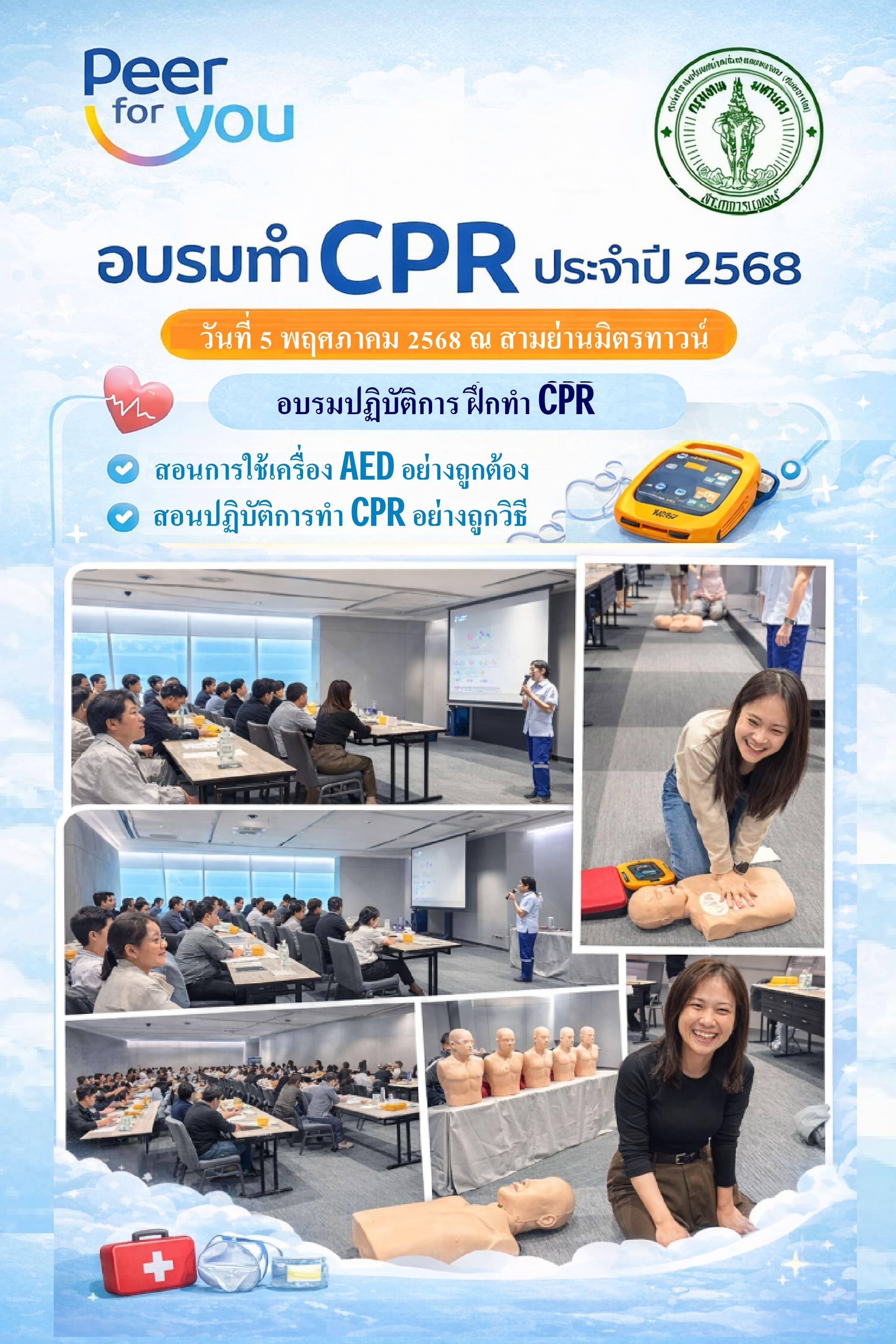
Employee Engagement
The Company organizes internal activities such as the annual New Year Party to strengthen relationships, teamwork, and employee morale.


Respect for Human Rights and Stakeholder Engagement
The Company provides grievance and whistleblowing channels through its website, enabling stakeholders to raise concerns or provide feedback in a confidential and secure manner.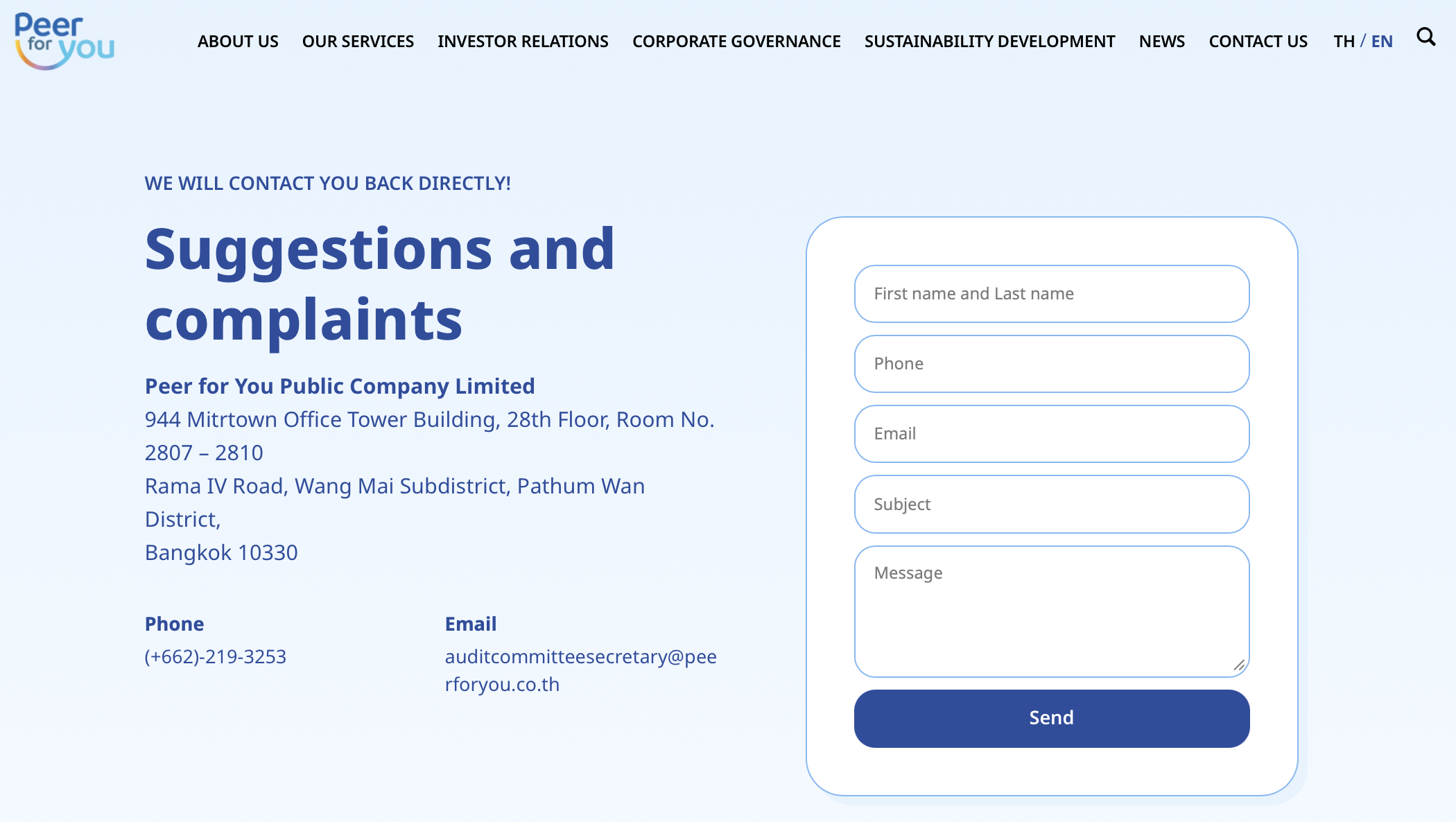
The Company remains committed to continuously improving its social performance and promoting sustainable growth.
Employees — Plan & Guidelines
Has an Employee Management Plan
Yes
Plan Description
The Company places strong emphasis on effective human resource management alongside fair treatment of employees’ rights, in order to support sustainable organizational growth. The key approaches are as follows:
Fair Compensation
The Company establishes a fair and competitive compensation and benefits structure, taking into account employees’ knowledge, skills, experience, and performance. Compensation is also benchmarked against market conditions to ensure competitiveness and to motivate employees to perform at their full potential. In addition, the Company regularly reviews compensation and benefits to align with economic conditions and business performance.Training and Employee Development
The Company continuously promotes employee development by providing free training programs relevant to job functions. These programs aim to enhance employees’ knowledge, skills, and competencies, enabling them to adapt effectively to changes in business operations and technology. The Company also supports continuous learning to improve overall workforce capability.Occupational Health and Safety
The Company prioritizes the health and safety of its employees by implementing various safety measures and programs. These include annual health check-ups, fire safety training, and cardiopulmonary resuscitation (CPR) training to ensure preparedness for emergency situations. The Company also maintains a safe and suitable working environment to minimize risks of workplace accidents and occupational illnesses.
Plan Areas
| Plan Area |
|---|
| Fair employee compensation |
| Employee training and development |
| Promoting employee relations and participation |
| Occupational health and safety in workplace |
Employees — Workforce
Introduction
The company has established a “Welfare and Compensation Policy” aimed at motivating employees to perform at their full potential, ensuring fairness, and maintaining standardized practices. Job evaluation and analysis are regularly conducted to ensure they remain up to date and appropriate to each role’s level of responsibility, aligned with business operations, and competitive with or comparable to compensation offered by leading companies.
The company ensures that its welfare and compensation policies comply with legal requirements, and that employee compensation is determined fairly based on market conditions, business competition, job characteristics, individual performance, and the company’s short- and long-term performance, while also considering the company’s ability to pay. Additionally, employees are given the opportunity to provide suggestions or file grievances related to their work. Such suggestions or complaints are taken seriously, reviewed carefully, and addressed with appropriate solutions to benefit all parties and foster positive working relationships.
Workforce — Introduction
The Company and its subsidiaries had the number of employees’ during the past 3 years as following:
Remark: In 2025, the significant decrease in the number of employees was due to the company’s sale of the Contact Center business. As a result, employees in this segment were transferred to an affiliated company as of August 30, 2024.
Workforce Data
| Metric | Current Year | Previous Year | Two Years Ago |
|---|---|---|---|
| Total number of employees (Persons) | 68 | 1,500 | 1,588 |
| Number of male employees (Persons) | 28 | 431 | 431 |
| Number of female employees (Persons) | 40 | 1,069 | 1,157 |
| Total employment of disabled persons (people) | 0 | 14 | 14 |
| Total disabled employees (people) | 0 | 14 | 14 |
| Total male disabled employees (people) | 0 | ||
| Total female disabled employees (people) | 0 | ||
| Total disabled workers who are non-employee (people) | 0 | ||
| Contributions to the fund for promoting and improving the quality of life for disabled persons | 0 | 1 | 1 |
| Total number of male employees in operational level (Persons) | 19 | 407 | 408 |
| Total number of male employees in management level (Persons) | 7 | 17 | 16 |
| Total number of male employees in executive level (Persons) | 2 | 7 | 7 |
| Total number of female employees in operational level (Persons) | 30 | 1,036 | 1,126 |
| Total number of female employees in management level (Persons) | 9 | 30 | 28 |
| Total number of female employees in executive level (Persons) | 1 | 3 | 3 |
Employees — Remuneration & Provident Fund
Remuneration & Provident Fund
| Metric | Current Year | Previous Year | Two Years Ago |
|---|---|---|---|
| Total disabled employees (people) | 55,705,055.22 | 313,876,218.29 | 412,509,957.56 |
| Total male employee remuneration (Baht) | 26,315,388.13 | 100,048,768.04 | 100,402,156.46 |
| Total female employee remuneration (Baht) | 29,389,667.09 | 213,827,450.25 | 312,107,801.1 |
| Number of employees eligible to participate in PVD (persons) | 68 | 1,500 | 1,588 |
| Total number of employees joining employee provident fund (Persons) | 34 | 213 | 232 |
| Percentage of total number of employees joining employee provident fund to total number of employees (%) | 50 | 14.2 | 14.61 |
| Number of PVD members / Total eligible employees (%) | 50 | 14.2 | 14.61 |
| Total amount of provident fund contributed by the Company (Baht) | 1,513,095.48 | 4,254,533.02 | 3,954,218 |
| Total amount of provident fund contributed by employee (baht) |
Employees — Training & Development
Training Data
| Metric | Current Year | Previous Year | Two Years Ago |
|---|---|---|---|
| Average employee training hours (Hours / Person / Year) | 15 | 20.01 | 20.08 |
| Employee development and training expenses (baht) | 260,235.13 | 300,548.09 | 3,968,657.72 |
Employees — Occupational Health & Safety
Introduction
In 2025, the company promoted and supported safety operations to reduce the risk of illness, injury, or loss of life, and to appropriately ensure the well-being of employees. Employees were encouraged to participate in fire safety and basic first aid training. During the year, there were no reported cases of work-related injuries resulting in lost work time.
Occupational Health & Safety Data
| Metric | Current Year | Previous Year | Two Years Ago |
|---|---|---|---|
| Total number of lost time injury incidents by employees (Cases) | 0 | 0 | 0 |
Employees — Labour Relations
Labour Relations — Introduction
In 2025, the voluntary turnover rate was 20.59%, representing an increase of 13.59% compared to the previous year. This was due to changes in the number of employees compared to the prior year following the transfer/sale of the Contact Center business.
Labour Relations Data
| Metric | Current Year | Previous Year | Two Years Ago |
|---|---|---|---|
| Total voluntary resignations (Persons) | 14 | 105 | 810 |
| Male employees who voluntary resigned (Persons) | 7 | 66 | 225 |
| Female employees who voluntary resigned (Persons) | 7 | 39 | 585 |
| Percentage of employee turnover leaving the Company voluntarily (%) | 20.59 | 7 | 51.01 |
| Evaluation result of employee engagement | 0 | 1 | 1 |
Employees — Employee Representation
Employees Are Represented Collectively
No
Employees — Targets
Has Set Employee Targets
No
Employees — Performance & Outcomes
Has Performance Results
No
Customers — Plan & Guidelines
Has a Customer Management Plan
Yes
Plan Description
Customers: Focus on satisfaction, trust, and long-term relationships
Enhance the quality of products/services
Increase customer satisfaction
Promote transparency and fairness
Ensure the secure protection of customers’ personal data
Plan Areas
| Plan Area |
|---|
| Responsible production and services for customers |
| Protection of customer personal information |
Customers — Satisfaction Results
Customer Satisfaction Results
| Metric | Current Year | Previous Year | Two Years Ago |
|---|---|---|---|
| Evaluation results of customer satisfaction | 0 | 1 | 1 |
Customers — Targets
Has Set Customer Targets
No
Customers — Performance & Outcomes
Has Performance Results
No
Community & Social — Plan & Guidelines
Has a Community & Social Plan
No
Community & Social — Targets
Has Set Community & Social Targets
No
Community & Social — Performance & Outcomes
Has Performance Results
No
Other Social Management
Introduction
-None-
Law Violation Incidents
Number of Incidents — Introduction
The company operates in accordance with its human rights and labor practices policies, with a strong focus on treating employees equally and fairly, in line with good governance principles and social responsibility. This approach helps mitigate reputational and legal risks. In 2025, there were no significant incidents of non-compliance with social and human rights laws or regulations.
Law Violation Incidents
| Metric | Current Year | Previous Year | Two Years Ago |
|---|---|---|---|
| The total number of cases or incidents of significant violations of laws or regulations regarding social and human rights (Cases) | 0 | 0 | 0 |
| The total number of cases or incidents that cause significant labor disputes (Cases) | 0 | 0 | 0 |
| The total number of cases or complaints related to consumer rights violations (Cases) | |||
| The total number of cases or complaints related to partner rights violations (Cases) | |||
| The total number of cases or incidents that cause disputes with the community/society (Cases) | |||
| The total number of cases or incidents related to cyber security or customer data breaches (Cases) | |||
| The total number of cases or incidents related to safety and occupational health at work (Cases) |